ClimUP Newsletter July 2026
|
Curious how we can make our campus and daily life a little greener and more future-friendly?
Find inspiration here that leaves you wanting more, and knowledge that turns action into change. Together on the path to a sustainable, climate-friendly future.
|
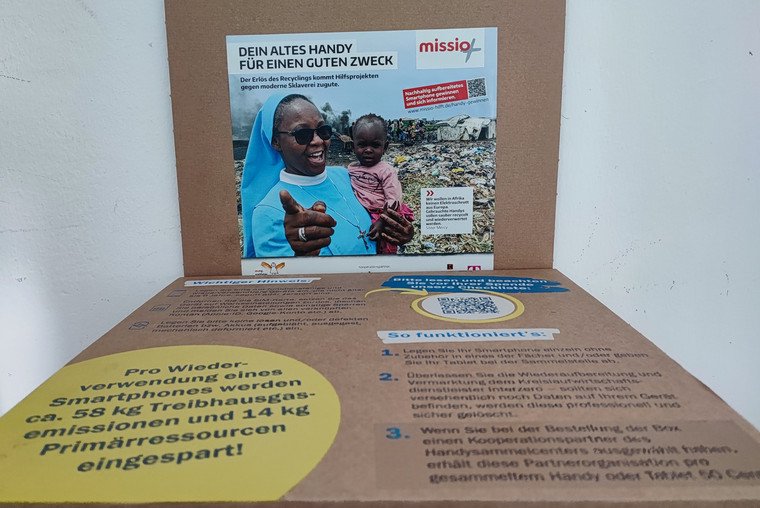
Collection of old mobile phones in summer 2026 – Urban mining
“URBAN MINING”: Collection scheme for old mobile phones and tablets
Until the end of July, collection boxes will be available at the reception desk in the administration building, at the circulation desk in the Central Library, and at the Nikolakloster – either at the food sharing point or at the reception desk. The boxes are emptied regularly. The collection scheme is run by the Blue Angel-certified mobile phone collection centre. Through this system, 15 per cent of the collected mobile phones are fully refurbished and reused as second-hand devices. 85 per cent of the devices are dismantled and valuable raw materials such as copper, gold, palladium and others are returned to the recycling cycle. Further information can be found at www.handysammelcenter.de.
A portion of the proceeds goes towards charitable projects, particularly in the environmental sector.
The devices can be placed in the boxes or sent via internal post to the Climate Protection Unit (NK 504) by 15 September.
|
Protection from the heat in summer: How to keep things bearable on campus
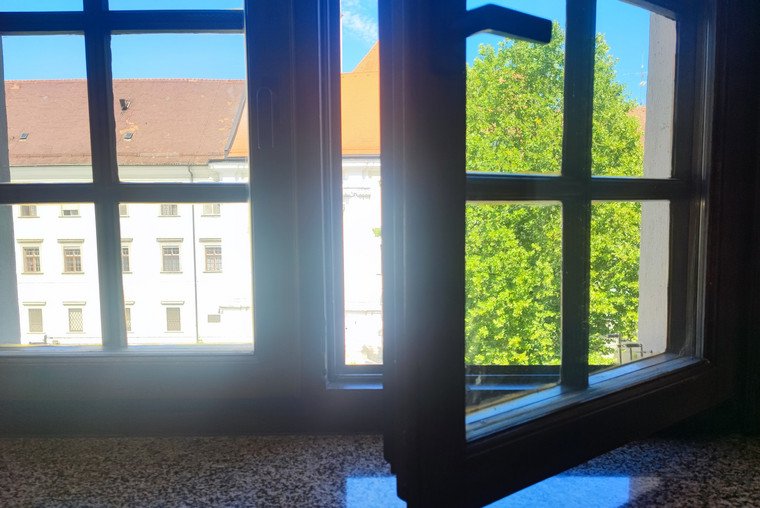
Summer, sunshine, stuffy air – clever ventilation
Temperatures are rising – and so are the room temperatures in offices and seminar rooms. With just a few simple steps, you can keep things pleasantly cool without air conditioning (which is often not available) or high energy costs.
Here’s how: - Ventilate in the early morning: Make the most of the cool hours between 6 and 8 am for vigorous ventilation. Close the windows again as soon as it gets warmer. Perhaps a colleague who is already at the university early can open the windows.
- Create shade during the day: Keep blinds, shutters or curtains closed. This keeps up to 80 per cent of the sun’s heat out.
- Reduce the use of electrical appliances: Switch off screens, printers and PCs that aren’t in use, as every electrical appliance produces waste heat.
- Greenery helps: Plants on the windowsill cool the room through evaporation – and lift your spirits.
|
Collection and return of office supplies
Distribution of second-hand office supplies: a success story!
In April, the Archives, in collaboration with the Climate Protection Unit, formalised the distribution of second-hand office supplies. These can now be easily requested using a form. Further information is available on the website!
The first few weeks have been a great success! The team from the Archives, Mr Heudecker and Ms Himsl, have processed 70 orders and put several hundred Leitz ring binders, clipboards and over 1,300 staples back into circulation.
Perhaps you’d like to make the most of the quieter summer months to have a bit of a clear-out? The Archive is still very happy to receive second-hand office supplies – simply send them to the Archive via the internal post system.
|
Sustainability Weeks 2026: 15–21 June 2026
Sustainability Weeks 2026
Sustainability Weeks took place at the University of Passau from 15 to 22 June 2026. They were organised by the Executive Support Unit for Climate Action Management in collaboration with numerous university groups, the Language Centre and other committed individuals. The result was a truly colourful and diverse programme centred on sustainability, climate protection and social transformation – not just for the university, but for the wider city community as well.
The kick-off: a round-table discussion and a real highlight
Monday began with the Sustainability Round Table on the topic of ‘Fair Trade University’. Later that day, there was a special performance at Ortsspitze: ‘Rivers and Poetry’ – featuring an Austrian-Congolese writer, held right next to the floating research laboratory BatoLabo. That was definitely the highlight of the week!
Information sessions and excursions – something for everyone
Alongside the major events, there were plenty of opportunities to get involved or learn something new: - FoodSharing / Fairteiler information stand – here, visitors could find out about food rescue.
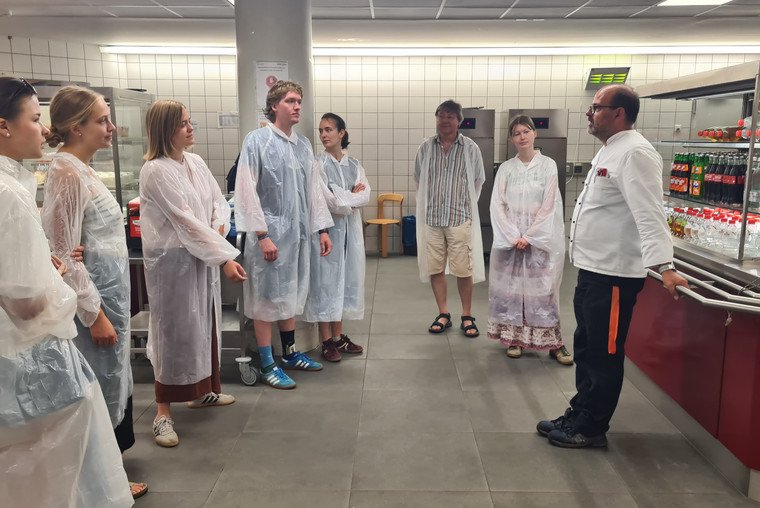
- Canteen tours – an insight into the university’s sustainable kitchen.
- Excursion to a community-supported agriculture scheme – out into the fields to understand where our food comes from.
- Socio-ecological walk through Passau – experiencing sustainability from a different perspective.
Conclusion: A successful event with plenty to take away
The Sustainability Weeks have shown that the mix of discussion, art, hands-on activities and exchange was a huge hit. A big thank you to everyone who took part and helped organise the event!
Any queries?
Simply send an email to: nachhaltigkeit@uni-passau.de
Programme for the Sustainability Weeks
|
STADTRADELN 2026 – University of Passau Team
The year 2026 was a resounding success for the ‘University of Passau’ team in the STADTRADELN challenge
Our ‘University of Passau’ team performed really well in this year’s STADTRADELN challenge. Having cycled over 8,000 kilometres, the university came 10th out of 64 teams in the university rankings. Particularly pleasing: we took first place in the ‘Strongest Team by Number of Participants’ category – a clear sign of just how many students and staff here are enthusiastic about cycling and the transport revolution.
About the campaign:
STADTRADELN took place in Passau for the 14th time from 22 June to 12 July 2026. For three weeks, every kilometre cycled by participants was counted – whether to university, to work or in their free time. In total, over 250,000 kilometres were clocked up in Passau, with 1,020 active cyclists.
Any questions?
Simply send an email to: nachhaltigkeit@uni-passau.de
|
Symposium „Exploring Spaces“
An interdisciplinary approach to spiritual ecology
From 28 to 30 April 2026, the University of Passau hosted the ‘Exploring Spaces’ symposium, which focused on ‘spiritual ecology’.
The conference examined and reimagined spaces from the perspectives of art, geography, religious studies and other disciplines. It was based on the assumption that spaces shape our patterns of experience – and that, conversely, our behaviour shapes spaces.
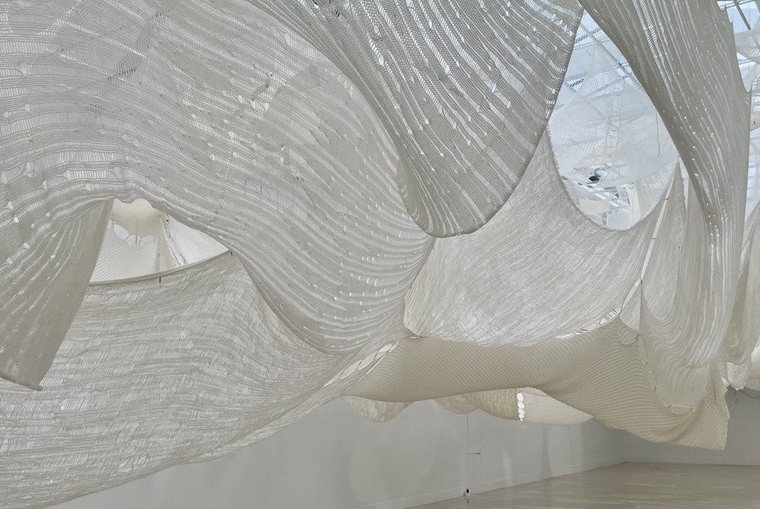
Through keynote talks, site visits and artistic research, specific living spaces in Passau – the university campus, the cathedral, the hospital, a shopping centre, the Dreiflüsseeck and a cemetery – were examined, experienced and transformed from multiple perspectives.
Through investigative observation, drawings, videography, deep listening and other interventions, extraordinary spaces for friction and reflection emerged. The aim was to find ways of designing living spaces in an ecological and aesthetic manner that bring out the dignity of human beings within nature and culture. Based on these experiences, the participants created a virtual museum.
The symposium was conceived by Prof. Dr Barbara Lutz-Sterzenbach (Art Education) in collaboration with Prof. Dr Werner Gamerith (Regional Geography), as well as Dr Ernst Wagner, Prof. Dr Michael von Brück and Alexander Benz (University of Life and Peace / LMU Munich).
|
Lecture: ‘Sustainability through Digitalisation’
The lecture offered by Prof. Dr Marina Fiedler and Christina Schäfer in the summer semester of 2026 examines the role of digital technologies in addressing key societal challenges such as climate change, resource scarcity, social inequality and sustainable corporate governance. This asynchronous self-study course is primarily aimed at Master’s students in Economics and Business Informatics.
Objectives and skills: Students will be equipped to critically evaluate digital sustainability solutions, analyse sustainability data and help shape digital transformation processes from a sustainability perspective. In addition to academic fundamentals, students will gain insights into current corporate sustainability initiatives and, using real-world case studies, learn how digital technologies can be used to solve specific sustainability problems.
Content and structure: The course is divided into seven interrelated thematic areas: Social sustainability through digitalisation (e.g. inclusion, health), environmental sustainability (e.g. circular economy, energy saving), sustainable governance (e.g. management of sustainability KPIs), digital interventions based on practical examples (e.g. real-time feedback), and commonalities and conflicting objectives across the various dimensions. The content is delivered on the ILIAS platform in seven asynchronous modules featuring videos, quizzes, compulsory reading and exercises.
|
|
Organisation and Governance
|
Prof. Dr Werner Gamerith elected to the BayZeN steering group
Prof. Dr Werner Gamerith, the Sustainability Officer at the University of Passau, has been elected to the steering group of the Bavarian Centre for Higher Education and Sustainability (BayZeN). His term of office is three years.
BayZeN is a think tank comprising Bavarian universities. Its aim is to improve the framework conditions for sustainability and climate protection at universities and to promote cross-university exchange.
Prof. Gamerith has been committed to sustainability issues at the University of Passau for many years. He can now contribute his expertise directly to the strategic development of BayZeN. Among other things, the steering group is overseeing the drafting of the BayZeN Position Paper 2026, which sets out proposals for the next framework agreement with the Free State of Bavaria.
|
Project Funding
National Climate Initiative
With the National Climate Initiative, the German government has been initiating and funding numerous projects since 2008 that contribute to reducing greenhouse gas emissions. Its programmes and projects cover a broad spectrum of climate protection activities: from the development of long-term strategies to concrete assistance and investment funding measures. This diversity guarantees good ideas. The National Climate Initiative helps to anchor climate protection locally. It benefits consumers as well as companies, municipalities, and educational institutions.
|
V.i.S.d.P.: University of Passau, Innstraße 41, 94032 Passau
Tel.: 0851/509-2022
Contact for questions: nachhaltigkeit@uni-passau.de
|
|