Intersectionality as a concept for analysing social inequality focuses on the multidimensionality of social processes of domination and shows that discrimination and inequality of opportunity along the lines of class, gender/sexuality, ethnicity/nationality are to be understood as intertwined. Influenced by Black Feminism, intersectionality was not only an analytical concept but also a political programme from the beginning. Social movements that are intersectional in their self-understanding fight for social, political and economic recognition of structurally marginalised groups. In the process, tensions repeatedly arise both in the formation of theory and in political practice. This field of tension between ideology critique and identity politics makes intersectionality a dynamic and contested field and raises contemporary questions and problems, which the lectures in this interdisciplinary lecture series address.
Except for the last lecture (19 July), all lectures are held in German. For more information on the lectures, see the German version of the page.
The lecture will take place on Tuesdays from 6 to 7:30 pm in the room WIWI HS 5 (and online via ZOOM).
This introductory lecture session provides a brief overview of the historical development of intersectionality concepts and places them within a historical, geographical and political context. This is followed by an examination of the inclusivity of different intersectionality concepts: which groups are taken into account? Do identities or social structures take centre stage? And what practical consequences do these factors have?
Karin Stögner, Prof. Dr., heads the Chair of Sociology at the University of Passau. Her research focuses on critical and feminist theory, critiques of anti-Semitism and racism, and gender studies. She is the author of *Anti-Semitism and Sexism: Historical and Societal Constellations* (Nomos 2014) and most recently co-edited, with Alexandra Colligs, the volume *Critical Theory and Feminism* (Suhrkamp 2022).
Social movements are shaped by intersectional inequalities, whilst at the same time opposing them. I wish to discuss this using the example of the New Women’s Movement in Germany and Japan, in which, at the outset, both lesbians and migrant women were marginalised. Gradually, however, they gained the power to define their own identities and developed strong voices by addressing conflicts both within and outside the movement. I propose the approach of ‘processual intersectionality’ to capture such changes theoretically.
Ilse Lenz, Prof. Dr. em., is Professor Emerita of Sociology (Gender and Social Structure Research) at Ruhr University Bochum. Her research focuses, amongst other things, on globalisation, gender and work, women’s movements in an international comparison, and complex social inequalities (class, ethnicity, gender). She has undertaken numerous research stays in Japan and South-East Asia.
In Critical Theory, racism is analysed as a relationship of domination. Grounded in materialist theory, this perspective must first examine how the organisation of modern societies as capitalist systems provides racism with a structural foundation upon which labour and inequality are organised; in other words, how ‘race’ and class are interlinked. Racism provides a justification for the Enlightenment postulate of the equality of all human beings remaining unfulfilled. It legitimises this inequality by portraying racialised people as natural, as inferior, as devoid of culture, and, through these attributions, largely determines their position in the production process and enables their excessive exploitation. However, this function of legitimising inequality applies not only to so-called ‘classical’ (biological) racism, but also, in a transformed form, to the currently dominant form of racism that seeks to fix people within their supposedly immutable cultures. Furthermore, it is important to discuss why the move away from these structural categories (‘race’, class, gender) and the exclusive focus on identities in the intersectionality debate weaken the analysis of society.
Dr Ulrike Marz studied social work and subsequently worked at a counselling centre for victims of right-wing violence. She then went on to study sociology and political science. Since 2009, she has been a research assistant at the Chair of Sociological Theories and History of Theory at the University of Rostock. She completed her PhD there in 2014 with a thesis on Islamic anti-Semitism in the Islamic Republic of Iran. In 2018, she held the visiting professorship in ‘Critical Social Research’ at Justus Liebig University in Giessen for one semester. In March of this year, she submitted a thesis entitled ‘Perspectives on a Critical Theory of Racism’ to the University of Rostock as her habilitation thesis.
Research into experiences of ethno-racial exclusion—that is, experiences of racism, stigmatisation and discrimination faced by minority groups—is currently a hot topic in the field of migration studies. This research is not only being taken up within academic circles; rather, it is also informing policy measures and public debate (see reports by the Federal Anti-Discrimination Agency). Against this backdrop, and bearing in mind the growing recognition that a realistic view of inequality and exclusion must be intersectional, this lecture asks whether, and if so how, intersectionality is being explored in migration studies and, in particular, in comparative qualitative research into experiences of ethno-racial exclusion. It should first be noted that systematic comparisons between different minority groups in varying contexts have paved the way for understanding which macro-factors shape the experience of ethno-racial exclusion. Nevertheless, comparative research in particular struggles to capture the reality of exclusion experienced through intersectionality. The lecture will discuss the reasons for this and highlight the resulting dilemmas. Furthermore, it will explore possible solutions and examine how these might be implemented methodologically and in concrete research practice.
Dr Eunike Piwoni is currently leading a DFG-funded research project on the affective dimensions and dynamics of (non-)belonging and the experience of ethno-racial exclusion. This project is based at the Chair of Sociology at the University of Passau, where she has held the post of Academic Councillor since February 2020.
She completed her PhD in 2011 at Otto Friedrich University of Bamberg with a thesis on the transformation of national identity in German intellectual discourse (VS Verlag für Sozialwissenschaften). She subsequently conducted research on the German integration debate, the cosmopolitanism of young elites and digitally mediated counter-public spheres (with publications in, amongst others, *Current Sociology*, *Journal of Communication* and *Identities*) at the University of London and the Georg-August University of Göttingen. Her current research interests focus on the perception of discrimination and the question of how people respond to experiences of exclusion (both in the situation itself and in the context of long-term strategies for action). To this end, she draws on theories from the sociology of culture and emotions, as well as qualitative methods of social research. An article is currently being published in *Ethnic and Racial Studies*, in which she develops a heuristic for improving the comparability of responses to ethno-racial exclusion in qualitative research.

Drawing on a number of case studies from the ‘long 19th century’, this lecture explores the connections between representations of Jewishness, gender roles, racialised attributions and constructions of national identity as reactions to the rise of capitalist modernity. It explores the respective contributions that critical theory and intersectional approaches can make to describing such constellations, and examines the possibility of a critical dialogue between the two traditions.
Dr Christine Achinger is an Associate Professor of German Studies at the University of Warwick and her research focuses, amongst other things, on literary studies, the history and theory of anti-Semitism, critical theory, and the constructions of gender, ethnicity and national identity and their interconnections. Publications include: *Distorted Faces of Modernity: Racism, Antisemitism and Islamophobia* (edited with Robert Fine, 2015); *Gespaltene Moderne: Gustav Freytag’s Soll und Haben – Nation, Geschlecht und Judenbild* (2007).
The lecture examines the concepts of religion and culture from an intersectional perspective. In doing so, it takes a critical look, in particular, at patriarchal gender relations. Contrary to the essentialist assumption that cultures should be recognised in their own distinct development and judged by their own standards, Petra Klug outlines a post-particularist feminism in which emancipatory principles take the place of identity politics.
Petra Klug, Dr., is a sociologist and a scholar of religion and cultural studies. She works as a postdoctoral researcher at the University of Bremen and was a visiting professor of Critical Social Theory at Justus Liebig University Giessen in 2019. Her book *Feindbild Islam?* has been published by Tectum-Verlag, and her book *Anti-Atheist Nation. Religion and Secularity in the United States* is due to be published shortly by Routledge.
Public discourse on the links between religion and gender is heavily focused on Islam – even though other faiths also provide ample material for gender-critical analysis. This discourse is heavily influenced by Orientalist patterns of thought. Islam is thus portrayed as the ‘other’ to the Western world; Muslim women are either exoticised or victimised, whilst Muslim men are broadly labelled as patriarchs or even perpetrators. Radical feminism, too, sometimes takes this line, portraying Islam as a comparatively monolithic bastion of sexism. In doing so, it invites criticism from postcolonial and post-secular feminism, which identifies the Orientalist patterns of thought within radical feminism as racist and rejects them as imperialist.
Building on this discourse constellation, I shall argue in my lecture that both positions lack a comprehensive intersectional perspective. Whilst radical feminism shows little interest in the potential racist implications of its discourse, feminist criticism of anti-Muslim racism tends to lose sight of those aspects of Islam that contribute to gender hierarchies. As an alternative, I propose a form of feminist critique of religion that encompasses all monotheistic revealed religions and takes the fundamental insights of postcolonial feminism just as seriously as the potential religiosity of feminist and other political actors.
Ina Kerner, Prof. Dr., is a political theorist and gender researcher and works as a professor of political science at the Institute for Cultural Studies at the University of Koblenz-Landau on the Koblenz campus. Her current research lies, on the one hand, at the intersection of political theory and postcolonial theory, and, on the other, in the field of religion and gender. Recent publications: ‘Decolonising Universalism? A dialogue on women’s rights, feminist struggles and the possibilities and problems of universal norms’. In: Julia Roth, Alexandra Scheele, Heidemarie Winkel (eds.): *Global Contestations of Gender Rights*. Bielefeld 2022: Transcript/Bielefeld UP, pp. 135–148 (co-authored with José-Manuel Barreto); (No) Apology for Universalism, in: blog interdisciplinary gender studies, 14 December 2021, and Provincialism and Semi-Intersectionality: Pitfalls of Feminism in Postcolonial Times. In: Feminist Studies, Vol. 38, Issue 1/2020, pp. 75–92.

For years, identity-political positions seem to have dominated social, political and cultural debates. For proponents of identity politics, the political arena is characterised by the differences between and competition amongst various collective identities.
From a left-wing, emancipatory perspective, identity politics denies the contradiction between the individual and society (or between the individual and ‘their culture’), as well as social differences within one and the same ‘culture’. And it amounts to abandoning the claim to the emancipation of society as a whole – in other words: the end of the left-wing project.
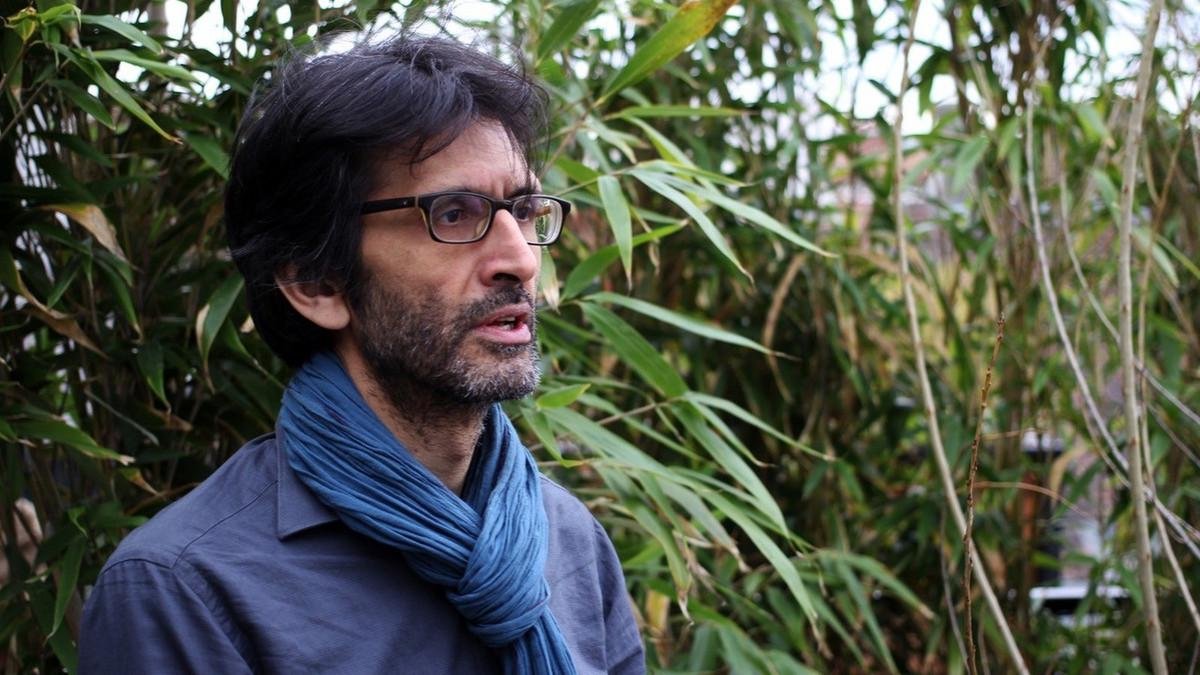
Dr Sama Maani now lives in Vienna as a freelance writer, having spent many years working as a neurologist and psychoanalyst. Publications (among others): *Zizek in Tehran* (novel, 2021), *Why I No Longer Talk About Islam* (collection of essays, 2022)
The headscarf has undergone a transformation in meaning in recent years. It has become a symbol of Islamic identity, and the woman who wears it has come to represent diversity. At the same time, the veiled woman is perceived as a victim. She is a woman, (mostly) a migrant and a Muslim. No wonder that the veiled woman is regarded as untouchable and that the headscarf has become a symbol of intersectional feminism’s struggle against traditional feminism. But – does the headscarf really stand for women’s liberation? Must we accept this interpretation? What about political Islam, which in turn regards the headscarf as its symbol? And how do we reconcile the contradiction between the emancipated woman who wears the headscarf and her role as a victim on multiple fronts?
Dr Lale Akgün, a qualified psychologist and author, is a Senior Fellow at Bonn-Rhein-Sieg University of Applied Sciences. She studied medicine, psychology and ethnology in Marburg/Lahn.
She served two terms in the German Bundestag representing the south of Cologne, where she was responsible for European and domestic policy issues, as well as acting as her parliamentary group’s spokesperson on Islamic affairs. She is an expert on the Islamic scene in Germany and has published two books on the subject: *Aufstand der Kopftuchmädchen* (2011) and *Platz da! Hier kommen die aufgeklärten Muslime* (2018).
Intersectionality is now being implemented as a normative concept in the form of diversity within many social institutions. These institutions are increasingly having to address the issue that individuals experience social discrimination, particularly on the grounds of gender, race/ethnicity, class, disability, age and/or religion. The focus of my talk is, on the one hand, on the normative development of diversity and, consequently, of intersectionality as a normative concept. On the other hand, it aims to highlight what this normative expectation means in everyday life for organisational culture – for example, at universities – as well as for individuals’ behaviour, and what problems this entails.
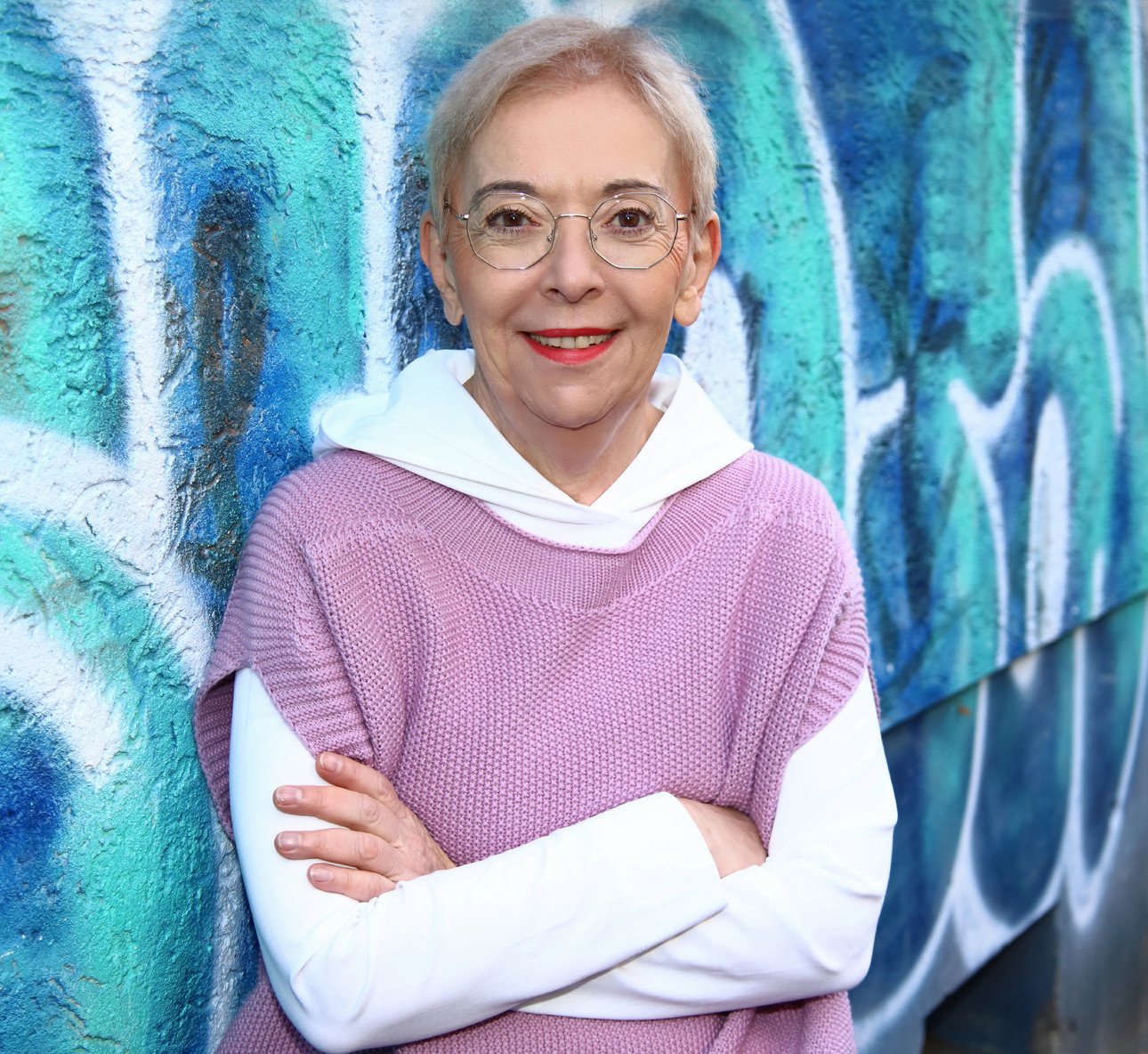
Andrea Maihofer, Professor Emerita, was Professor of Gender Studies and Director of the Centre for Gender Studies at the University of Basel from 2001 to 2020. She was also President of the Swiss Society for Gender Studies (SGGF) from 2010 to 2018 and Director of the Gender & Diversity ThinkTank from 2018 to 2020. Her research focuses on critical social and gender theory, and the change and persistence of gender and gender relations, with a current focus on right-wing populism and masculinity.
The aim of this lecture is to present some issues related to intersectionality and identity debates in Brazil. We will see them against the background of their historical development, from the 1970s onwards, and how they became a heated topic in Brazilian politics nowadays. To understand these debates, that is, the uses (and abuses) of gender, race, and, more recently, intersectionality, we will pursue two analytical levels: how the terms develop and are challenged both in the broader public discourse and in academic and intellectual venues. We will disentangle the traps and potentialities of contested issues that are at the heart of many controversies which are not exclusive to Brazil, but that here acquire particular traits and implications.
Ana Claudia Lopes, PhD, is Adjunct Professor of Philosophy at the Federal University of Bahia (Brazil) and Post-Doctoral Researcher at the Department of Philosophy at the University of São Paulo (Brazil). She works on ethics and political philosophy, critical theory, gender and feminism. She has earned a Ph.D. in philosophy from the University of Campinas in 2019 with a dissertation on the relationship between practical philosophy and Critical Theory in the work of Seyla Benhabib. She was a visiting researcher at the Cluster of Excellence "The Formation of Normative Orders" at the Goethe University (Germany) (2014/2018). She also works as a translator, being one of the translators of Situating the Self (Seyla Benhabib, 1992) and Justice Interruptus (Nancy Fraser, 1996) to Brazilian Portuguese. She contributed a chapter to the recently published Kritische Theorie und Feminismus, edited by Karin Stögner and Alexandra Colligs.

The lecture series is sponsored by the former University Women’s Representative, Prof. Dr Andrea Sieber.