[Programme for download]
Thursday 8 October. Day 1 . INHA, rue Vivienne (salle Vasari)
9:00 Registration and welcome
9:30-10:30 Keynote 1: Chair: Eugénie Zvonkine
Sharofat Arabova: Negotiating History and Identity in Tajik Cinema. Reinterpreting the Past from the Vakhsh Canal to Shahnameh
BREAK
11:00- 12:30 Session 1. Film Histories
Chair: Catriona Kelly
Sultan Usuvaliev, Narrating Movement: The Category of Development in Histories of Kyrgyz Cinema
Eleanor Womack, Anxieties of Influence in Kazakh Socialist Realism: Beimbet Mailin and Gabit Musrepov’s Amangeldy, 1936-1939
Misha Zakharov, Building a (Counter-)Archive of Central Asian Queer Cinema
12:30-13:45 LUNCH
13:45-15:15 Session 2. Contemporary Cinema
Chair: Elena Larionova
Inna Smailova, The Transformation of Realism and the Aesthetics of the inner experience in films of the new generation of Kazakh filmmakers (RU)
Gulbara Tolomushova, К вопросу об интересе современных кыргызских режиссеров к запретным (табуированным) темам в истории Кыргызстана первой половины XX века
Qiyu Wang, Restorative and Lyrical Nostalgia: Competing Visions of National Identity in Kyrgyz Cinema
17:00 Film Screening (Entrepôt, 7 Rue Francis de Pressensé, Metro Pernety): Erke Dzhumakmatova: Kurak [for a film review, see here]
Friday 9 October. Day 2
9:00-10:30 Session 3. Kyrgyz Cinema
Chair: Matthias Meindl
Xavier Hallez, Kurmandzhan datka (2014), a Kyrgyz ‘national’ and historical film: between scriptwriting and political choices
Raisa Sidenova, History on the Periphery: Iuz Gershtein’s Look Back, Comrade! in the Context of Kyrgyz Poetic Documentary
Eugenie Zvonkine. Animals at the Origins of the National Kyrgyz Cinematography, from horses (Eto loshadi) to dogs (Bezhala sobaka), from Okeev to Abdykalykov
BREAK
11:00-12:30 Session 4. Uzbek Cinema
Chair: Benjamin Quénu
Olga Kim, The Colonial Frontier in the Soviet “Eastern” Genre: Ali Khamraev’s The Seventh Bullet (1972)
Elizabeth Papazian, A Bird’s-Eye View: Layered Temporality and Spatiality in Ali Khamraev’s Poetic Cinema
Lida Oukaderova, 1960's Tashkent on Film
12:45 LUNCH
14:00-15:30 Session 5. Kazakh poets, Soviet children, Chinese heroes?
Chair: Dina Iordanova
Assel Uvaliyeva, Prometheus Unbound: The Poet as Substitute Savior in Post-Soviet Kazakh Cinema
Michael Brodski, The Significance of the Child Figure in Central Asian Cinema during the Soviet Thaw
Chris Berry, Seeing Year of the Dragon (1981) as an Anti-Eastern
BREAK
16:00-17:30 Session 6. Early Soviet
Chair: Vlad Strukov
Gulnara Abikeyeva, Towards Rethinking the Periodization of Soviet Central Asian Cinema
Lilya Kaganovsky, Nonindifferent Nature: Nadezhda Zubova’s Arabi (1930) and Multispecies Thinking
Assiya Issemberdiyeva, Kazakh Film Production at TsOKS: Between Moscow Priorities and Local Patrons
Saturday 10 October. Day 3
9:30-11:00 Session 7. Music & Ballet
Chair: Marguerite Vappereau
Linda Kvitina, From Stage to Film and Back: Careers of Ballet Choreographers in Soviet Kazakhstan
Brian Kilgour, Steppe Soundtracks: Soviet-Kazakh Identity in Thaw-Era Kazakh Cinema
Katie Freeze Wolf, On Songs and Singers in Davlat Khudonazarov’s The First Morning of Youth (1979)
BREAK
11:30-12:30 Keynote 2: Chair: Birgit Beumers
Peter Rollberg, Auteur Theory and the History of Central Asian Cinema
LUNCH
14:00-15:30 Session 8. Cultural Politics and Industries
Chair: Adrien Fauve
Rico Isaacs, The Politics of Seeing: Dialectical Images, Counter-Hegemonic Narratives and the Cinema of Adilkhan Yerzhanov
Birgit Beumers, Central Asian film industry
Erke Dzhumakmatova, Co-Production in Central Asian cinema
BREAK
16:00-17:00 Concluding Remarks
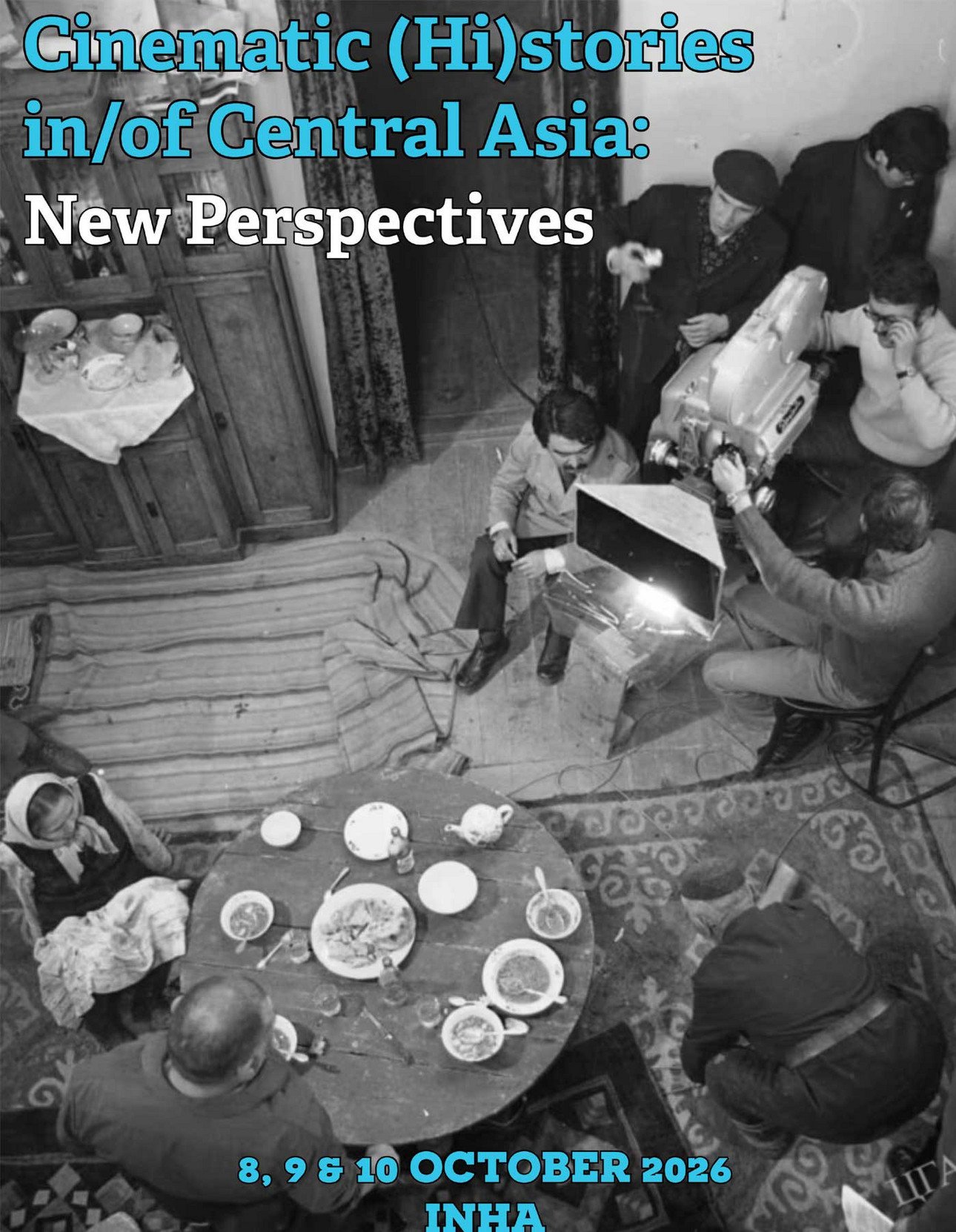
Central Asian cinema has (finally) moved into the focus of scholarly attention, particularly following the Russian invasion and a new approach to geopolitical boundaries. Since the collapse of the Soviet Union, which now goes back over thirty years, the Central Asian Republics (CARs, viz Kazakhstan, Kyrgyzstan, Tajikistan, Turkmenistan and Uzbekistan) have gained independence. Cinema histories have been rewritten, and film industries have developed in different ways and at different speeds. While Kazakhstan has built a production and distribution network, largely independent of Russia, Kyrgyzstan has grown its own production agenda with a strong art-house presence whilst also catering for local audiences. Meanwhile, Uzbekistan has built a good network of cinemas but relies on Russia for training and for distribution, whilst its film production remains closed on its own culture. More importantly, we have seen a new approach to Soviet-era films made in Central Asia. Looking back at archival production files, researchers have shed a new light on the interventions and relationship between Moscow’s Goskino and the local authorities and studio councils, and how this has impacted on the final films.
It is therefore high time to devote a conference to the cinema of Central Asia and look again, or afresh, at its history and its present state. We are looking for papers on aspects of the history and the current state of Central Asian cinema. In particular, we are interested in discussions around such topics as: How do we write or rewrite national film histories? How national, transnational or global is the Central Asian film industry? What kind of historical plots drive Soviet and contemporary films made in Central Asia (narratives and representation of historical figures)? How do production histories develop and reflect political agendas, in particular regarding scriptwriting, censorship interventions, studio management, and production finance? How centralized or decentralized is film education in the republics since their independence?
This conference is organised by Birgit Beumers (University of Passau) and Eugénie Zvonkine (University Paris 8, ESTCA), and it is funded through a DFG grant “Central Asia as Cinematic Territory” and the French University Institute (IUF).
Working languages are English and Russian. The publication of a selection of papers is planned.
Conference email: cacinema.paris26@proton.me