Logo of the University of Passau

Visiting Researchers

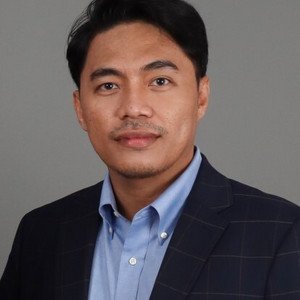
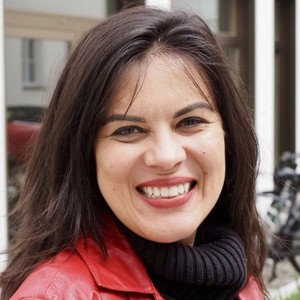
Dr. Roperto S. Deluna, Jr.

Dr. Roperto S. Deluna, Jr.

Dr. Roperto S. Deluna, Jr. is an Associate Professor and the Dean of the College of Applied Economics at the University of Southeastern Philippines. He is also a leading researcher at the Socio-Economic Research and Data Analytics Center (SERDAC Mindanao), where he specializes in socio-economic research services. Dr. Deluna holds a Ph.D. in Economics from the Royal and Pontifical University of Santo Tomas.

His research spans three primary areas: impact evaluations, farm succession planning, and macroeconometrics. He conducts randomized control trials to assess the effects of land parcelization on beneficiaries of the Philippine agrarian reform program. He leads evaluations of the Philippine Seaweed Program and the Philippine Mallard Duck (ItikPinas) Program to measure stakeholder impact and provide recommendations for future development. Additionally, Dr. Deluna oversees a farm succession laboratory that explores farm succession across agricultural sub-sectors, including studies on farmers in Lantapan, Bukidnon, coffee farmers, and cacao farmers, to support the institutionalization of succession planning in the Philippines. His academic research also focuses on macroeconometrics, particularly the analysis of asymmetry in macroeconomic variables to better understand the effectiveness of policy responses to economic shocks.

Dr. Deluna served as a visiting researcher at the University of Passau in 2024, where he contributed to the ReValueD project through his work on “Farm Succession in the Philippines.”

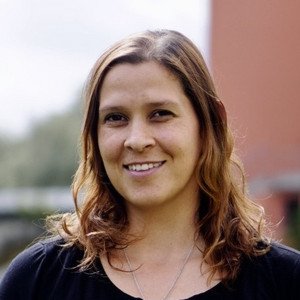
Dr. Moises Neil V. Seriño

Dr. Moises Neil V. Seriño

Dr. Moises Neil V. Seriño is a professor of the Department of Economics, Visayas State University (VSU), Philippines and currently served as the Vice President for Planning and Development at VSU. He holds a doctorate degree in Economics from the University of Göttingen, Germany with Prof Stephan Klasen as his supervisor. He was a visiting research fellow at the Center for Southeast Asian Studies, Kyoto University, Japan. He was a John Dillon Fellow of the Australian Center for International and Agricultural Research, Australia and recipient of the USDA Scientific Exchange Fellow at Louisiana State University, USA. He served as a guest lecturer at the Universitas Negeri Malang (Indonesia), University Malaysia Terengganu (Malaysia) and King Mongkut's Institute of Technology Labkrabang (Thailand).

He is a board member of the Philippine Agriculture and Economic Development Association. He served as the national co-convenor of the Australia Alumni Agriculture, Aquatic and Natural Resources Community of Practice. He is a regular member of the National Research Council of the Philippines (NRCP). In addition, Dr. Seriño has been appointed as one of the members of the Technical Panel for Economics of the Commission on Higher Education (CHED), Philippines in 2022.

Dr. Seriño served as a Visiting Researcher at the University of Passau in 2024, where he contributed to the ReValueD project related to behavioral experiments with coconut producers in the Philippines.

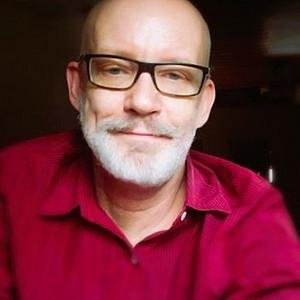
Prof. Dr. Germano Reis

Prof. Dr. Germano Reis

Dr. Germano Glufke Reis is a professor and researcher at the Federal University of Parana, School of Management, in Southern Brazil. He is also the coordinator of the SfoodLab (Sustainable Food Value Chains Laboratory). He holds a Ph.D. in Business Administration from the University of São Paulo, Brazil, and was a visiting Ph.D. scholar at the Judge Business School, University of Cambridge, UK. He conducted postdoctoral research at the International Institute of Social Studies, Erasmus University, in the Netherlands. Moreover, he was a visiting scholar at the Cellular Agriculture Research Group within the Ruralia Institute at the University of Helsinki, Finland. 

His research primarily focuses on sustainable food value chains, with a specific emphasis on the meat industry and the sector of meat alternatives. He has explored various facets of the value chains of cultivated meats (cell-based meat) and other alternative sources of proteins that possess the potential to significantly transform the conventional meat industry. These alternatives can alleviate pertinent environmental and animal ethics concerns associated with large-scale animal-based meat production. 

He will be a visiting researcher at the University of Passau as part of the Passau International Centre for Advanced Interdisciplinary Studies (PICAIS) fellowship program and will engage in collaboration with the Bioeconomy Economics research group. During his time in Passau, Dr. Reis will be involved in the project titled “Disruptive innovation and “hybrid” products: an economic perspective of the disruptive potential of different forms of cultivated (cell-based) meats”.

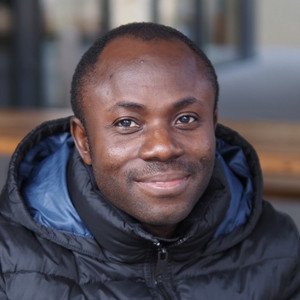
Dr. Peter Bilson Obour

Dr. Peter Bilson Obour

Dr. Peter Bilson Obour is a Senior Lecturer in the Department of Geography and Resource Development at the University of Ghana, Legon. He holds an MSc in Agro-Environmental Management and a PhD in Agroecology (Soil Physics and Hydropedology) from Aarhus University, Denmark.

Dr. Obour’s research lies at the interface of the natural and social sciences, addressing sustainability challenges in agricultural systems. Over the past five years, his work has focused on three key areas: (i) soil management and the use of organic amendments for sustainable crop production, (ii) climate change impacts and adaptation in smallholder agriculture, and (iii) the development of resilient and sustainable farming systems.

Dr. Obour served as a Visiting Researcher at the University of Passau in 2025, where he contributed to the ReValueD project related to behavioral experiments with cashew producers in Ghana.

I agree that a connection to the Vimeo server will be established when the video is played and that personal data (e.g. your IP address) will be transmitted.
I agree that a connection to the YouTube server will be established when the video is played and that personal data (e.g. your IP address) will be transmitted.
Show video