















In January 2026, Daphne Santiago concluded her third and final round of field research in the Philippines, wrapping up nearly four months of travel across the country’s major island groups: Visayas, Luzon, and Mindanao. Conducted under the Bioeconomy Economics Research Group at Universität Passau, the project involved close collaboration with teams from Visayas State University, led by Ana Recto, and the University of Southeastern Philippines, led by Dave Roblis.
The study explored key questions about farmers’ decision-making under risk, carbon farming, and land reform. It investigated how farmers respond to individual and collective risks, the influence of kinship networks on these decisions, the willingness of farmers to participate in carbon farming contracts, and stakeholders’ perspectives on improving land reform.
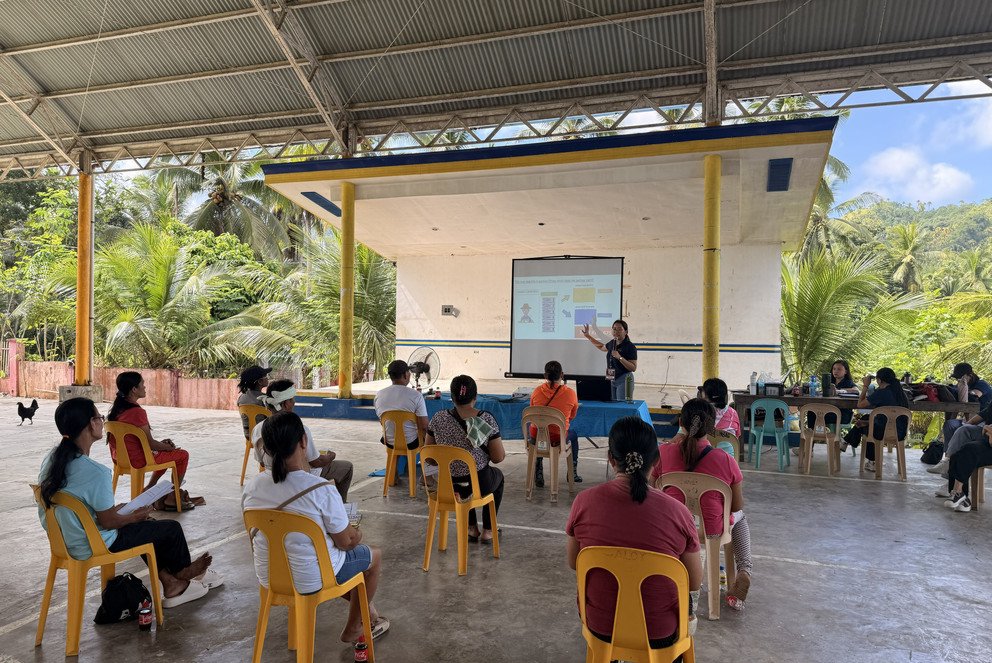
During the fieldwork, Daphne led 70 behavioral game sessions with 832 coconut farmers across Leyte (Visayas), Quezon Province (Luzon), and Davao Oriental (Mindanao), conducted in Bisaya and Filipino. In addition, 22 stakeholders from public and private sectors, including farmers, extension officers, traders, researchers, cooperative leaders, and company employees—were interviewed for the land reform study. The research was conducted in collaboration with Dr. Terese Venus, with the land reform component carried out alongside Dr. Roperto Deluna Jr.
The results of this research are expected to inform policies on sustainable agriculture, risk management, and land reform in the Philippines, helping bridge academic insights and community needs.