The researchers from the involved disciplines examine the multiple dimensions of agrobiodiversity from different disciplinary perspectives. This allows for a critical reflect upon the research process.
Overall, BioDIVA aims to generate transformation knowledge for a sustainable and gender-equitable use of agrobiodiversity in rice farming systems. This examination of local conditions is intended to contribute to a larger public debate on agrobiodiversity use and land use change.
To develop agrobiodiversity for sustainability, BioDIVA benefits from the outcomes of several debates. The assumptions and theoretical frameworks of the different disciplines represented in the BioDIVA team were shared and analysed with the aim to identify overlaps, gaps and contradictions. Based on this, a common, interdisciplinary language and working modus that enables synthesis and arrive at recommendations is established.
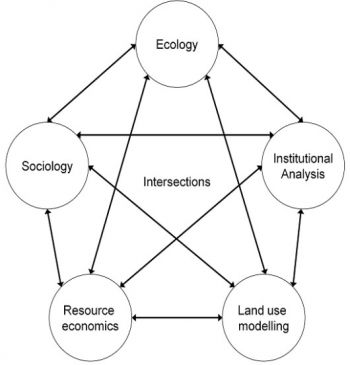
By identifying intersections in terms of research questions central to each discipline, shared interests were explored along the lines of each BioDIVA’s core themes agrobiodiversity, gender, rice, and sustainability. This process offered the opportunity to cross disciplinary boundaries and channel the finding into the development of a common research design.
The conceptual framework integrates the previously identified intersections of the BioDIVA research disciplines.