








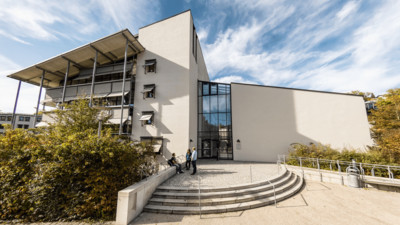

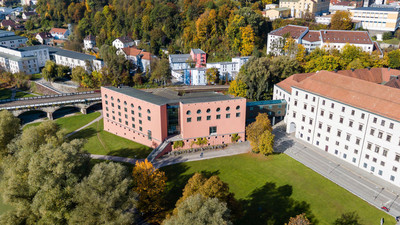

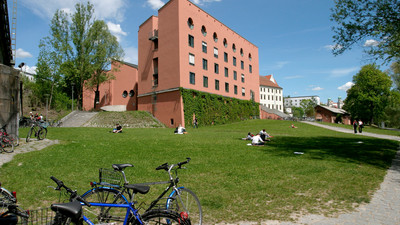

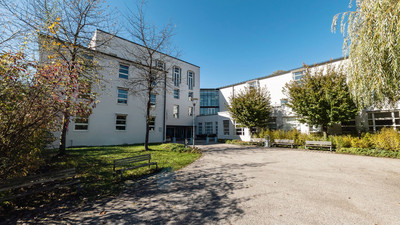


In the current GreenMetric Ranking, the University of Passau places 187th among a total of 2,016 higher education institutions. In a field of participants that is once again growing strongly, it thereby ranks among the world's best ten percent for the first time. Particularly in the Waste category, the University improved its score to 1,700 points – the highest attainable score. The University also performs very well in the categories of Energy and Climate Change, Water, and Transportation.
The ranking surveys, for example, energy consumption, the share of self-generated renewable energy, energy-efficient refurbishment, the carbon footprint of the University as well as measures for the continuous reduction of greenhouse gas emissions. Waste management is examined in detail – from paper and plastics to organic waste and special waste, including the respective recycling rates and measures to prevent waste. Overall, the University has achieved a total score of 8,300 points across the seven indicators assessed – an increase of just under 300 points compared with the previous year.
"The fact that the University of Passau is a special place that is associated with sustainability in the broadest sense is reflected in this outstanding result – the best since the University began participating in the ranking regularly and successfully in 2021. At the same time, this pleasing result also stands for the spirit of everyone at the University – staff and students alike – who have contributed to its success and for whom a sustainable campus is a matter of great concern", emphasises Professor Werner Gamerith, Sustainability Officer of the University of Passau.
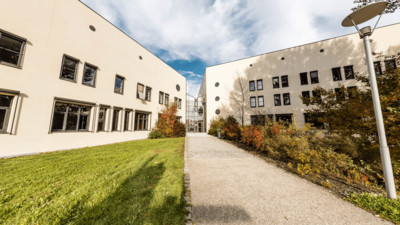
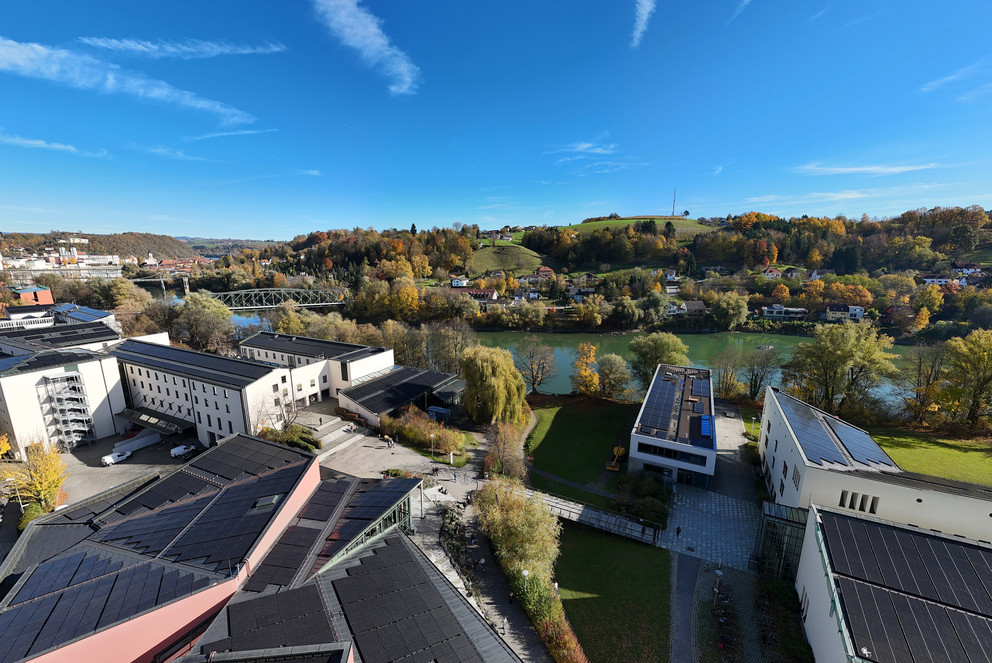
As early as the 1970s and 1980s, the University of Passau was planned and realised with the aspiration of creating a future-oriented and sustainable university campus. The University's sustainable founding history has been continuously built upon in recent years and continued through new approaches in the areas of climate protection, biodiversity and sustainability. Most recently, for example, a new photovoltaic system was commissioned, and approaches to strengthening biodiversity and urban gardening on the campus were implemented. The University of Passau also intends to build on this in future, developing the campus further as a visible model of a university that is future-proof, promotes biodiversity and is oriented towards health and wellbeing.
"We are delighted with these excellent ratings. The University not only practises sustainability on its campus every day; the topic of sustainable transformation and the question of how we can create a liveable future for everyone are also central to one of the University’s emerging research areas, where our academics seek answers to the pressing questions of climate change, social inequality and global responsibility", commented Professor Harald Kosch, Vice President for Academic Infrastructure, IT and Sustainability, on the success in the ranking.
President Professor Jan Hendrik Schumann thanked all those involved: "I’d like to offer my heartfelt congratulations to all the dedicated researchers and staff of our University on this outstanding result and thank them for their great commitment. The result reflects the consistent and successful work with which sustainability at our University is being advanced in research, teaching and everyday campus life. Together, they are making the University of Passau a true beacon of sustainable development and a model of how universities can assume responsibility for the future."
About the GreenMetric Ranking
The GreenMetric Ranking has been conducted annually since 2010 as a non-profit initiative of the University of Indonesia and assesses a comprehensive spectrum of sustainability activities and parameters of international universities and higher education institutions. Specifically, the following seven thematic areas are examined: Infrastructure; Energy and Climate Change; Waste; Water; Transportation; Education and Research; and – newly added in 2026 – Governance and Digitalisation. For the third consecutive year, Wageningen University (Netherlands) leads this "green ranking" internationally. The Environmental Campus Birkenfeld (Trier University of Applied Sciences) has moved up to second place, and the University of São Paulo (Brazil) is the new third-place institution.