









During the coronavirus pandemic, demonstrators compared the Infection Protection Act to the ‘Enabling Act’ of 1933; ‘Reich citizens’ continue to this day to deny the existence of the Federal Republic of Germany; and the AfD has been the second-strongest party in the Bundestag since 2025. Conspiracy narratives are therefore no longer a marginal phenomenon. They undermine trust in elections, science and the media – in other words, precisely those institutions on which a democracy depends.
In the case study ‘A Comparative Analysis of Conspiracy Thinking: The Case of Germany’, researchers from the University of Passau, as part of the Horizon Europe collaborative project TaCT-FoRSED, investigated how democratic structures and conspiracy thinking influence one another. The study will be published in October as a pre-print and in print in early 2027 as part of an anthology published by Nomos Verlag. It forms part of a series of eight country studies and a comparative study.
Overall, according to the authors, there is no evidence to suggest that conspiracy ideologies are more widespread today than in the past. “Nevertheless, it is not a false impression that we have this perception: even if there are not necessarily more people holding these views, conspiracy ideologies appear to have become more politically and socially influential in recent years,” says Dr Christoph, a political scientist at the University of Passau and lead author of the study. This is due, in particular, to the influence of organised groups and media networks promoting conspiracy ideologies, which aggregate conspiracy-based attitudes from the general public, thereby making politics and society receptive to conspiracy ideologies.
The case study on Germany paints a contradictory picture: “Nationwide figures, which portray Germany as a country with moderate levels of belief in conspiracy theories, mask regions and social groups in which such belief is deeply entrenched. This complicates simple narratives along the lines of ‘more democracy, less conspiracy thinking’”, the study authors state.
The key findings of the German case study:
- Moderate by comparison: In the European Social Survey (ESS), 12.8 per cent of Germans agreed that a ‘small secret group’ makes all the important decisions in world politics. “That is the second lowest figure in the EU after Sweden”, says Dr Christoph. At the same time, however, surveys show that between a quarter and a third of Germans tend to be susceptible to this kind of thinking.
- Concentrated rather than widespread: On the other hand, the study reveals that conspiracy belief is deeply entrenched in certain regions and social groups: Among AfD supporters, 73.5 per cent display a pronounced conspiracy mentality; eastern Germany is disproportionately affected.
- Cultural underpinnings: High expectations of the ‘nanny state’ and a long tradition of scepticism towards so-called ‘conventional medicine’ – from the Romantic era to the Nazi ‘New German Medicine’ – were mobilised on a massive scale during the pandemic.
- Elements of politics such as direct democracy, deliberative democracy and other forms of participatory democracy are relatively underdeveloped. “As a result, many people feel they have little political influence. Conspiracy theorists promise them a kind of veto power as a substitute,” says Dr Christoph. At the same time, expanding these structures or focusing on the traditionally strong voluntary sector could counteract this.
Conspiracy belief becomes particularly politically significant when political parties and movements harness it. Strategies that rely solely on media literacy and critical thinking on the part of individuals are therefore “likely to be insufficient”. The study identifies independent courts, a strong public service broadcasting system, a dense network of political education and the memory of the failure of the Weimar Republic as counterbalances.
In addition to Germany, the research team examined Austria, Bulgaria, the Czech Republic, France, Slovakia, Spain and the United Kingdom. Content-wise, the main narratives in the countries studied range from migration to health policy.
Scientific approach
Methodologically, this is a secondary analysis: the team did not conduct its own surveys but collated existing data – large-scale population surveys, international democracy indices and specialist literature. A common analytical framework allows for a comparison of the eight countries. It distinguishes between three levels – the state and its institutions, political parties, movements and the media, and the attitudes of individuals – and three democratic resources: democratic identity, resilience and the sense of political agency. The study is exploratory in nature: it describes correlations but does not prove causality.
Research team
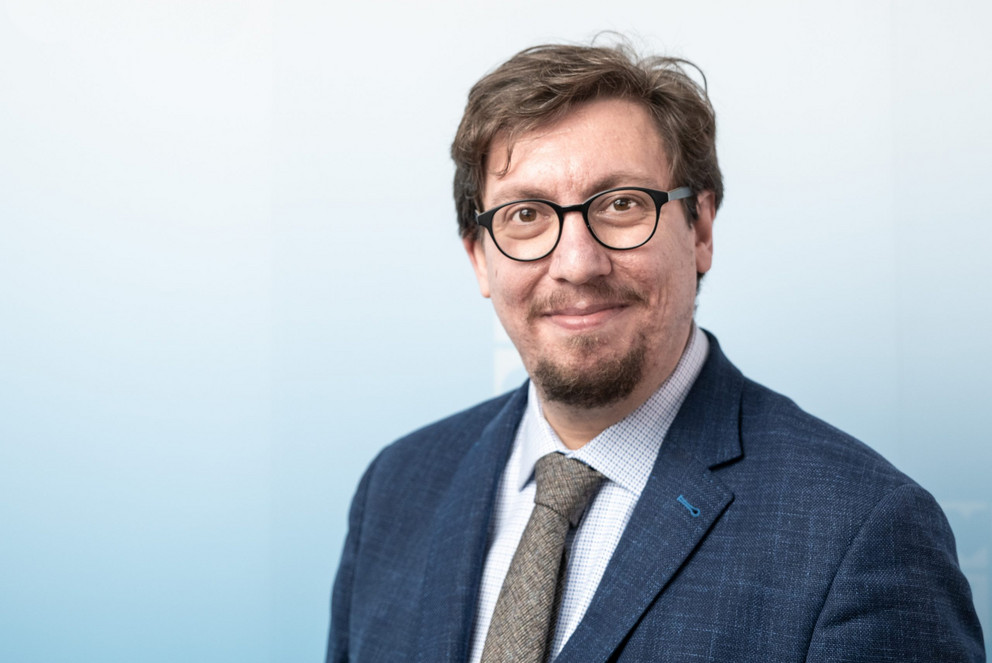
Dr Stefan Christoph is a research fellow at the Chair of Political Science, specialising in political theory, at the University of Passau. His research focuses, amongst other things, on conspiracy thinking, democratic theory and political education. He leads a work package within the Horizon Europe research consortium „Tackling Conspiracy Theories by Fostering Resilience and Political Self-Efficacy in Democracies (TaCT-FoRSED)“, which uses qualitative studies to examine conspiracy ideologies and effective countermeasures. He was assisted in compiling the case studies by Michelle Colleen Schweitzer (University of Leipzig) and Sebastian Schwarzweller (University of Passau). Also involved in the German case study was Professor Oliver Hidalgo, holder of the Chair of Political Science specialising in political theory, who, together with Dr Hannes Birnkammerer from the University of Passau, is the coordinator of the research network.
The European Union is funding the project with a total of more than three million euros as part of the Horizon Europe programme (funding agreement 101178926 in the call "Past, present and future of democracies; HORIZON-CL2-2024-DEMOCRACY-01"). At the University of Passau, the consortium forms part of the ‘Resilient Democracies’ established research area. Within this area, researchers from various disciplines are investigating the threats to democratic systems in order to identify ways of strengthening their resilience.
Funding statement
Funded by the European Union. Views and opinions expressed are however those of the author(s) only and do not necessarily reflect those of the European Union or the European Research Executive Agency (REA). Neither the European Union nor the REA can be held responsible for them.