
Logo of the University of Passau
Decorative banner image Decorative banner image

Cybersecurity and Data Protection

Cybersecurity and Data Protection

Digitalisation is transforming our everyday lives. It gives rise to a wide range of serious security incidents for our society – from private households and businesses to critical infrastructure.

A key challenge is to raise awareness of digital risks within our society. This requires a paradigm shift. Cybersecurity must be user-friendly. This is where the established research area of "Cybersecurity and Data Protection" at the University of Passau comes in. Researchers from the fields of computer science, law, economics, and social and educational sciences are working together across disciplines to develop security concepts and technologies to strengthen the cybersecurity of our society.

Projects

The research draws on a wide range of networks.

At the Passau Institute for Digital Security (PIDS), researchers from four faculties are working on various aspects of digital security – from the legal framework and new technical solutions to issues of usability and social acceptance.

Within the Bavarian research network ForDaySec, which is coordinated from Passau, scientists from five Bavarian universities are working on everyday digital security. Researchers from the fields of sociology and ethnography are investigating people’s everyday interactions with digital technology. These findings are in turn used by computer scientists for IT security and by legal experts for legal requirements.

The University of Passau is continuously expanding its expertise in the established research area of "Cybersecurity and Data Protection". Three chairs and professorships at the Faculty of Computer Science and Mathematics are working on core areas of digital security, including a professorship established as part of the Hightech Agenda Bavaria. These are complemented by chairs and professorships at the Faculty of Law on IT law and legal tech, at the Faculty of Economics on privacy-preserving business models, and at the Faculty of Social and Educational Sciences on psychology and human-machine interaction.

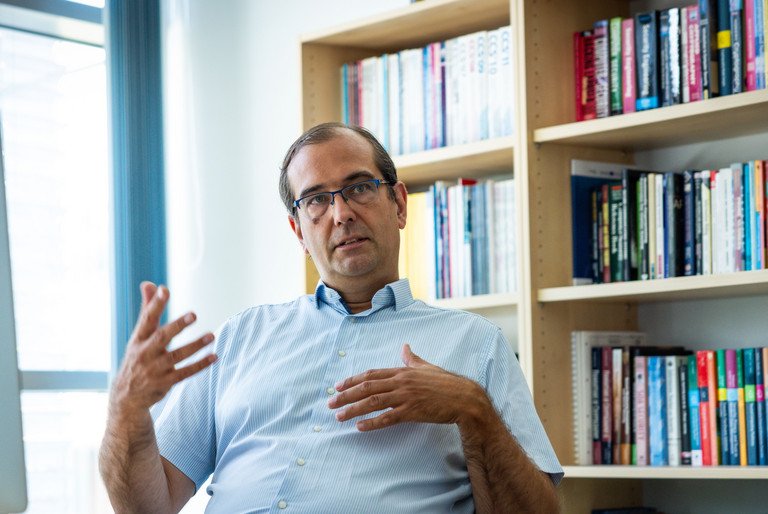
Through interdisciplinary collaboration, we are taking a new approach to cybersecurity: technical innovations must be geared towards people’s everyday lives.
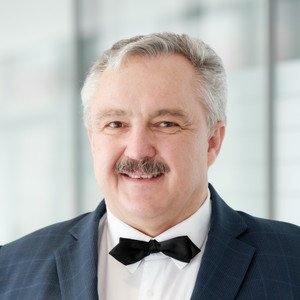
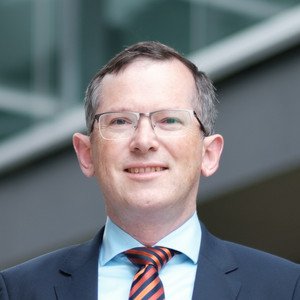
Professor Stefan Katzenbeisser, Computer Engineering

Interdisciplinary and cross-faculty research is based at the following institutions:

  • "Passau Institute of Digital Security" (PIDS): Researchers from four faculties work on aspects of digital security. Their mission is to develop practical approaches for the next generation of security and privacy.
  • "Institute for the Law of the Digital Society" (IRDG): The IRDG acts as a central institution that examines issues relating to the digitalisation of society from a legal perspective.

Insights into the topics

Participating researchers

Professor Michael Beurskens

Professor Michael Beurskens

researches digital economy and legal tech

How can global internet giants be regulated by the law?

Professor Michael Beurskens holds the Chair of Civil Law, German, European and International Business Law. He is interested in questions relating to the direct and indirect regulation of the digital economy, especially by way of antitrust law, and in questions regarding licence and liability law, for example in intellectual property law, in data protection law or in relation to non-compliant digital products and services.

Professor Christian Hammer

Professor Christian Hammer

researches language-based software security

How to identify security gaps using information flow control?

Professor Christian Hammer holds the Chair of Software Engineering I. Language-based software security is one of his main research interests. His particular focus is on the security of mobile and web applications, Internet-of-Things devices and concurrent systems. After earning his doctorate at the Karlsruhe Institute of Technology (KIT), he did research at IBM Research and Purdue University. He then went on to become a professor at Utah State University, Saarland University and Potsdam University.

Professor Hermann de Meer

Professor Hermann de Meer

researches smart electricity networks

How can we make the electricity network safe and stable using digitalisation?

Professor Hermann de Meer holds the Chair of Computer Networks and Computer Communications at the University of Passau and is Honorary Professor at University College London. Previously, he held positions as Junior Professor at the University of Hamburg and Visiting Professor at Columbia University in New York City, USA. His research interests include cloud computing, energy systems, network virtualisation, IT security, smart grid, smart city, Industry 4.0, the digitalisation of energy systems, computer networks, and computer communication, as well as distributed computing.

Professor Stefan Katzenbeisser

Professor Stefan Katzenbeisser

researches cyber security and technical data protection

How can critical infrastructures in a networked world be protected against cyber attacks?

Professor Stefan Katzenbeisser holds the Chair of Computer Engineering at the University of Passau. He researches cyber security in embedded systems, critical infrastructures and technical data protection. He is spokesperson of the research cluster "ForDaySec - Security in everyday digitalisation", which is funded by the Bavarian Science Ministry. Besides participating in research projects on secure mobility, he is also involved in the research initiative "6G Research and Innovation Cluster (6G-RIC)". Since November 2023, Professor Katzenbeisser has been a representative of the DFG Review Board “Security and Dependability, Operating, Communication and Distributed Systems”.

Professor Martin Kreuzer

Professor Martin Kreuzer

researches computer algebra

How do you check the security of encryption systems using computer algebra?

Professor Martin Kreuzer has held the chair of Mathematics with a focus on Symbolic Computation since 2007. His main research areas are computer algebra, commutative algebra, algebraic geometry and their applications. He is particularly interested in algebraic cryptography, which deals with the construction of new cryptosystems and the security analysis of existing cryptosystems using algebraic methods. The DFG project "Algebraic Error Attacks", which investigates the protection of cryptographic hardware against fault injections, is his most important activity in this field.

Professor Susanne Mayr

Professor Susanne Mayr

researches psychology and human-machine interaction

How does being connected online affect us as humans?

Professor Susanne Mayr has held the Chair of Psychology and Human–Machine Interaction of the Faculty of Social and Educational Sciences since 2015.

Professor Joachim Posegga

Professor Joachim Posegga

researches IT security

How to make IT applications secure in everyday life?

Professor Joachim Posegga holds the Chair of IT Security at the University of Passau. He earned his doctorate at Karlsruhe Institute of Technology (KIT) and conducted industrial research in the field of security for a period of ten years before he was appointed head the Research Group "Security in Distributed Systems" of the Department of Informatics at the University of Hamburg. In 2009, he moved on to Passau and was appointed head of the Institute for IT Security and Security Law (ISL). In his research, he focuses on web security, security architectures and protocols, placing a special emphasis on the Internet of Things.

Professor Thomas Riehm

Professor Thomas Riehm

researches contract and liability law as well as conflict resolution, including issues regarding digitalisation

What does digitalisation mean for the application and development of laws that are over 100 years old?

Professor Thomas Riehm holds the Chair of German and European Private Law, Civil Procedure and Legal Theory and is the speaker of the Institute for Digital Society Law (IRDG) as well as a member of the Passau Institute for Digital Security (PIDS). His main research interests are contract and liability law with a focus on IT matters but also civil dispute resolution, including their digitalisation. Among other areas, he focuses on the legal issues that arise from the digitalisation of civil law proceedings, the use of AI, contract law for digital services, and the adaptation of form requirements to digitalisation needs.

Professor Meinhard Schröder

Professor Meinhard Schröder

researches in public and IT law

How can law ensure IT security?

Professor Meinhard Schröder holds the Chair of Public Law, European Law and IT Law. He is a member of the Passau Institute of Digital Security (PIDS) and the Institute for Digital Society Law (IRDG). His research interests include German and European economic constitutional and administrative law, administrative procedural law and e-government law, municipal law, data protection law and data law.

Professor Kai von Lewinski

Professor Kai von Lewinski

researches the collision of jurisdictions in information exchange

What does the internet mean for geographically limited legal systems?

Kai von Lewinski is Professor of Public Law, Media Law and Information Law at the University of Passau and chairs the DFG-funded Research Training Group 1681/2 ‘Privacy and Digitalisation’. Prior to this, he was the Academic Director of the Foundation for Data Protection in Leipzig.

Professor Thomas Widjaja

Professor Thomas Widjaja

researches on IT architecture management, data-based business models, and privacy

What changes when companies develop new services using customer data?

Professor Thomas Widjaja has held the Chair of Business Information Systems since 2016. He is also one of the principal investigators of the DFG Research Training Group 2720. Previously, he gained his doctoral and postdoctoral degrees at TU Darmstadt.

Professor Jens Zumbrägel

Professor Jens Zumbrägel

researches algebra and cryptography

How can abstract maths be used to enhance the security of encryption?

Professor Jens Zumbrägel has been Professor of Mathematics with a focus on Cryptography since 2017. He is all enthusiastic about algebra and its applications in public key cryptography and communication technology. His research focus is on the discrete logarithm problem, and currently also on post-quantum cryptography and codes over rings.

I agree that a connection to the Vimeo server will be established when the video is played and that personal data (e.g. your IP address) will be transmitted.
I agree that a connection to the YouTube server will be established when the video is played and that personal data (e.g. your IP address) will be transmitted.
Show video