









After the Madrid train bombings of 11 March 2004, theories that the attack had been orchestrated by domestic enemies persisted for years. During the COVID-19 pandemic, the lockdown was branded a “communist coup.” And in 2024, a Telegram influencer who portrays politics as controlled by a criminal “deep state” won around 800,000 votes and three seats in the European Parliament. Conspiracy narratives in Spain are not marginal – they reach the ballot box.
The case study ‘Conspiracism in Comparison: The Case of Spain will be published as a pre-print this October and in print in early 2027 as part of an anthology by Nomos. It forms part of a series of eight country studies within the Horizon Europe research project TaCT-FoRSED and examines how democratic structures and conspiracy thinking influence one another. The lead author is Blai Blanchet Gutiérrez from the Universitat Autònoma de Barcelona. At the same time, a comparative study is currently being published. The author of this study is Dr Stefan Christoph from the University of Passau.
Key findings for Spain:
- A durable master narrative: From the “Judeo-Masonic-Bolshevik” plot of the 1930s to COVID-19, one storyline recurs: the left, in league with foreign powers, seeks to destroy the nation.
- Concentrated on the right: The most consequential actors – Vox, the new party SALF, alternative media and ultra-Catholic groups – form a networked infrastructure on the radical right.
- A legitimacy gap: Spain is a full democracy on paper, yet only 39 per cent of citizens feel represented by any party, and trust in politicians averages 2.8 out of 10.
- Average, not exceptional: 31.6 per cent agree that a “small secret group” runs world politics – slightly below the European average of 32.9 per cent.
According to the study, today’s conspiracy theories are “updated versions of an ideologically coherent master narrative” with deep roots in media, party politics and civil society. That continuity makes them resilient – but the study also identifies a key mechanism that could be addressed. Distrust during the pandemic appears to have worked as a “gateway conspiracy,” a point of entry into broader conspiratorial thinking. Clear crisis communication by public institutions could therefore have an outsized effect. The most persistent vulnerability, however, lies in the gap between formal democratic quality and perceived legitimacy: conspiracy narratives “offer an explanation for why a formally democratic system produces outcomes that most citizens do not feel they authorised.” Local participatory projects such as Barcelona’s Decidim platform show how this gap might be narrowed. Positive attitudes towards science, a strong commitment to democracy and reforms in civic education also act as counterweights.
In addition to Spain, the research team examined Austria, Bulgaria, the Czech Republic, France, Germany, Slovakia and the United Kingdom.
Initial findings from the comparison of all country studies:
- There is no evidence to suggest that conspiracy ideologies are more widespread today than in the past. Nevertheless, it is not a false impression that we have this perception: even if there are not necessarily more people holding these views, conspiracy ideologies appear to have become more politically and socially influential in recent years.
- This is due in particular to the influence of the so-called meso-level. This includes, for example, political actors and the establishment of dedicated media networks promoting conspiracy ideologies. On the one hand, these actors aggregate conspiracy-based attitudes from the general public; on the other, they make politics and society more receptive to conspiracy ideologies.
- However, the specific content of conspiracy ideologies also plays a role in their appeal. In the countries studied, there are five main narratives, ranging from migration to health policy.
Scientific approach
Methodologically, the study is a secondary analysis: rather than conducting new surveys, the team brought together existing data – population surveys, international democracy indices, historical research and media studies. A shared analytical framework makes the eight countries comparable. It distinguishes three levels – state and institutions; parties, movements and media; and individual attitudes – and three democratic resources: democratic identity, resilience and efficacy (the sense of political influence). The approach is exploratory: it maps relationships rather than proving causes.
About the research team
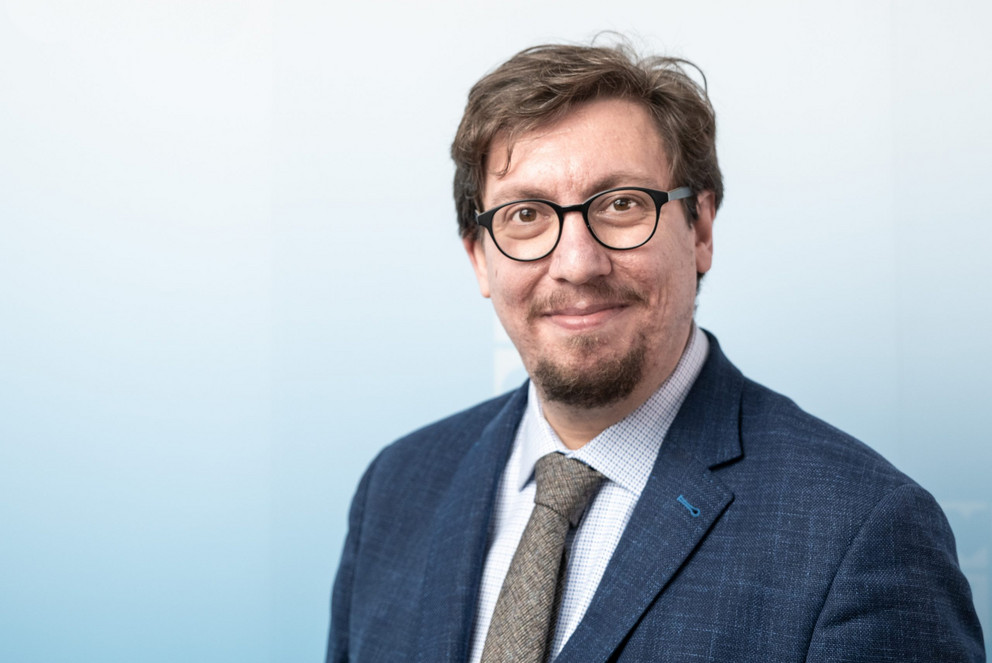
Blai Blanchet Gutiérrez is a political economist and reseach assistant at Universitat Autònoma de Barcelona. He was supported in the study by Michelle Colleen Schweitzer (Leipzig University), Sebastian Schwarzweller and Dr Stefan Christoph (both University of Passau). Dr Christoph is the head author of a comparative study in conspiracism in Europe, based on these eight case studies. Dr Christoph leads a qualitative oriented Work Package in the Horizon Europe project TaCT-FoRSED, co-ordinated by the University of Passau.
Funding statement
The European Union is funding the project over a period of three years as part of the Horizon Europe programme (funding agreement 101178926 in the call "Past, present and future of democracies; HORIZON CL2-2024-DEMOCRACY-01").
Funded by the European Union. Views and opinions expressed are however those of the author(s) only and do not necessarily reflect those of the European Union or the European Research Executive Agency (REA). Neither the European Union nor the REA can be held responsible for them.