









The “Great Replacement,” the claim that Europe’s population is being deliberately exchanged for immigrants, was coined in France and has since travelled far beyond it. During the COVID-19 pandemic, more than half of the French agreed with related conspiracy narratives. Such beliefs feed into polarised debates on migration, public health and the media – and they reach the centre of political competition.
The case study ‘Conspiracism in Comparison: The Case of France‘ will be published as a pre-print this October and in print in early 2027 as part of an anthology by Nomos. It forms part of a series of eight country studies within the Horizon Europe research project TaCT-FoRSED and examines how democratic structures and conspiracy thinking influence one another. The lead author is Dr Stefan Christoph from the University of Passau, who is also the author of a comparative study currently being published.
Key findings for France:
- A long tradition: Modern French conspiracism reaches back to Abbé Barruel’s 1797 account of the Revolution as a Masonic plot, runs through the Dreyfus affair and continues in today’s “Great Replacement” narrative.
- Formal strength, felt powerlessness: 69.7 per cent of citizens feel they have little or no influence on the political system, and 57 per cent feel represented by no party.
- High receptivity: In a four-country comparison, 58.6 per cent of French respondents agreed with COVID-related conspiracy narratives – more than in Germany, Spain or the Czech Republic.
- Across the spectrum: Conspiracy-adjacent rhetoric appears not only on the far right, but in parts of the radical left as well.
The authors conclude that “formal democratic quality is an insufficient guarantor of resilience against conspiracist influence.” The gap between France’s institutional strength and citizens’ everyday experience of democracy creates a legitimacy vacuum that conspiracy theories fill. In the study’s words, conspiracism functions “not as a fringe deviation from mainstream political culture but as a structurally available interpretive repertoire.” Two levers stand out. First, the media: concentrated ownership has undermined trust and lent credibility to the “captured media” narrative, so ownership rules and support for independent journalism become democratic safeguards. Second, participation: citizens’ assemblies and participatory budgeting can strengthen people’s sense of influence – if they reach beyond the “usual suspects.” Strong scientific institutions, an active fact-checking scene and moderate affective polarisation help to contain the problem.
In addition to France, the research team examined Austria, Bulgaria, the Czech Republic, Germany, Slovakia, Spain and the United Kingdom.
Initial findings from the comparison of all country studies:
- “There is no evidence to suggest that conspiracy ideologies are more widespread today than in the past. Nevertheless, it is not a false impression that we have this perception: even if there are not necessarily more people holding these views, conspiracy ideologies appear to have become more politically and socially influential in recent years,” the authors write.
- This is due in particular to the influence of the so-called meso-level. This includes, for example, political actors and the establishment of dedicated media networks promoting conspiracy ideologies. On the one hand, these actors aggregate conspiracy-based attitudes from the general public; on the other, they make politics and society more receptive to conspiracy ideologies.
- However, the specific content of conspiracy ideologies also plays a role in their appeal. In the countries studied, there are five main narratives, ranging from migration to health policy.
Scientific approach
Methodologically, the study is a secondary analysis: rather than conducting new surveys, the team brought together existing data – population surveys, international democracy indices, historical research and media studies. A shared analytical framework makes the eight countries comparable. It distinguishes three levels – state and institutions; parties, movements and media; and individual attitudes – and three democratic resources: democratic identity, resilience and efficacy (the sense of political influence). The approach is exploratory: it maps relationships rather than proving causes.
About the research team
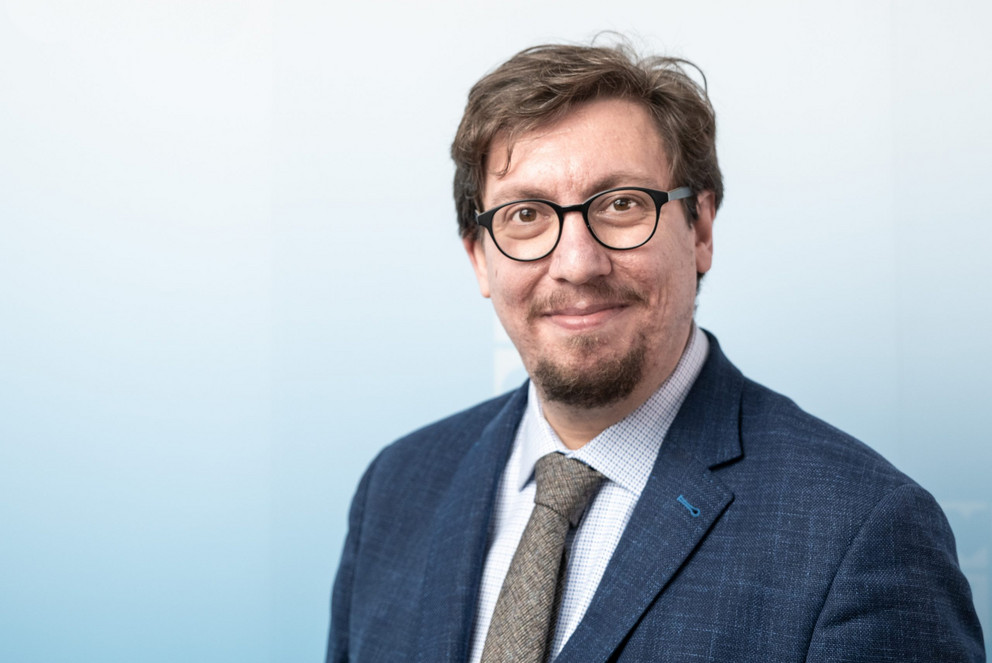
Dr Stefan Christoph (University of Passau) is the head author of a comparative study in conspiracism in Europe, based on these eight case studies. Dr Christoph leads a qualitative oriented Work Package in the Horizon Europe project TaCT-FoRSED, co-ordinated by the University of Passau. He was supported by Professor Alejandro Romero Reche who is a professor at the department for sociology at the University of Granada. He was furthermore supported in the study by Sebastian Schwarzweller (University of Passau) and Michelle Colleen Schweitzer (Leipzig University).
Funding statement
The European Union is funding the project over a period of three years as part of the Horizon Europe programme (funding agreement 101178926 in the call "Past, present and future of democracies; HORIZON CL2-2024-DEMOCRACY-01").
Funded by the European Union. Views and opinions expressed are however those of the author(s) only and do not necessarily reflect those of the European Union or the European Research Executive Agency (REA). Neither the European Union nor the REA can be held responsible for them.