Once a year, as part of Sustainability Day, the University of Passau presents sustainability awards in the categories of sustainability-related research and sustainability activities and teaching. Each award is worth 1,500 euros. We would like to thank Sparda-Bank for its generous support.
The prize for sustainability focused research can be awarded to university members of all status groups whose academic thesis or body of research addresses the challenges of sustainable transformation.
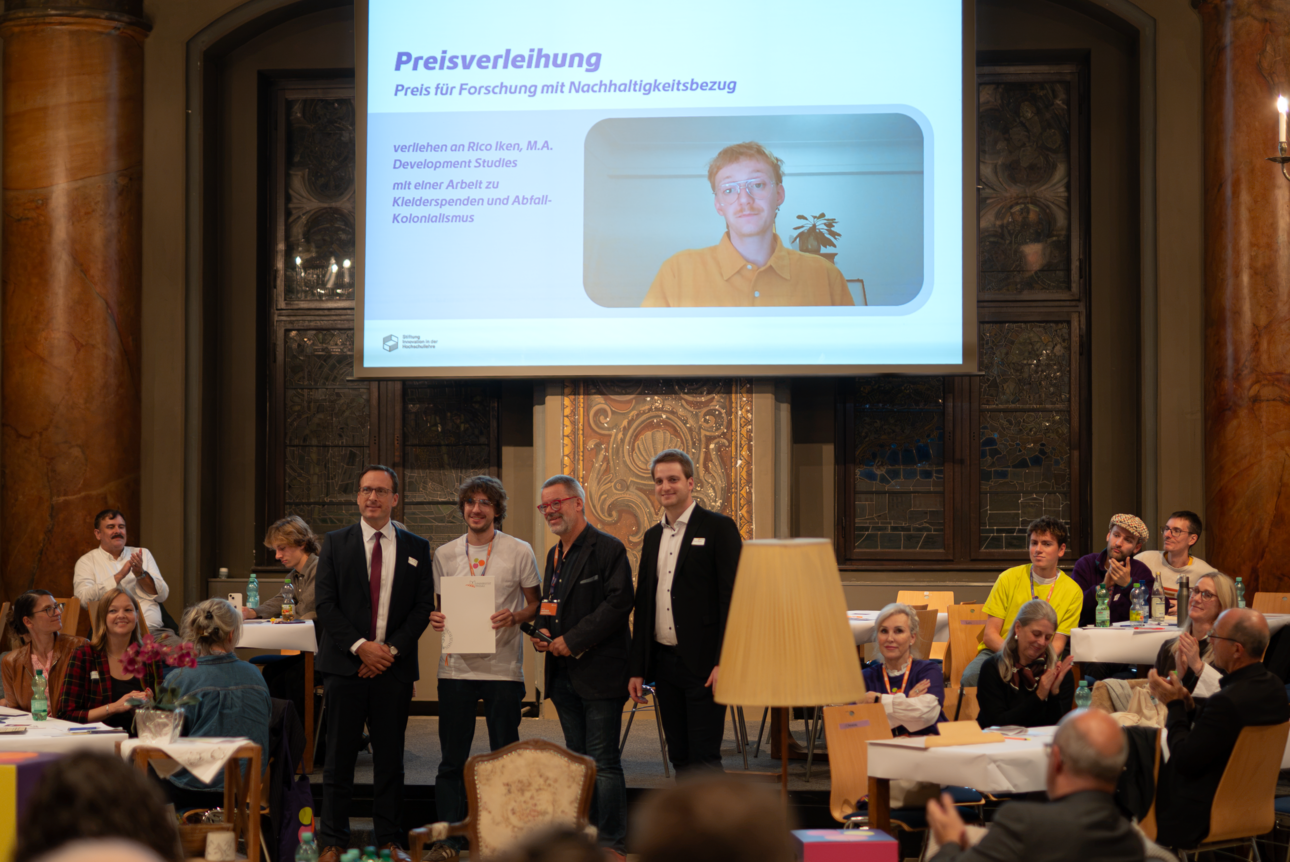
A nuanced look at the global consequences of our clothing donations
As part of the University of Passau’s Sustainability Awards, Rico Iken, a student of Development Studies, was honoured for his outstanding Master’s thesis. His research examines the complex impacts of German donations of second-hand clothing on local communities in Kenya, focusing on the perspectives of Kenyan upcycling designers. The thesis makes an important contribution to understanding global material flows and the socio-ecological challenges posed by the fast-fashion industry.
The research: between the waste problem and creative value creation
In his Master’s thesis, Iken examined the supply chain for second-hand clothing – from collection in Germany to its arrival at markets such as Gikomba Market in Nairobi, Kenya’s largest second-hand market. In doing so, he went beyond a purely economic analysis and examined how German clothing donations both present challenges and open up opportunities for local communities.
His research focused on the perspectives of Kenyan upcycling designers. These creative individuals transform discarded clothing – which often arrives in Kenya in large quantities and of poor quality – into new, high-quality creations. Iken demonstrated how these designers create new value from what is perceived as ‘waste’ from industrialised nations, whilst developing creative strategies to cope with the flood of second-hand clothing.
From Research to Exhibition: Making Science Tangible
To make his research findings accessible to a wider public, Iken exhibited some of the upcycled creations, along with the underlying concept, on Steiningergasse in Passau. The exhibition combined scientific findings with visual and physical examples, encouraging visitors to reflect on their own clothing consumption and the consequences of donating old clothes. The series of posters accompanying the exhibition provided food for thought and challenged common assumptions about the supposedly good deed of donating clothes.
Scientific relevance and social impact
Rico Iken’s work is a striking example of how research at the University of Passau establishes a direct link to the major challenges of sustainable transformation. By analysing the global interconnections of the textile industry and giving a voice to those directly affected by the consequences of our consumption choices, he makes an important contribution to a critical and nuanced debate on sustainability.
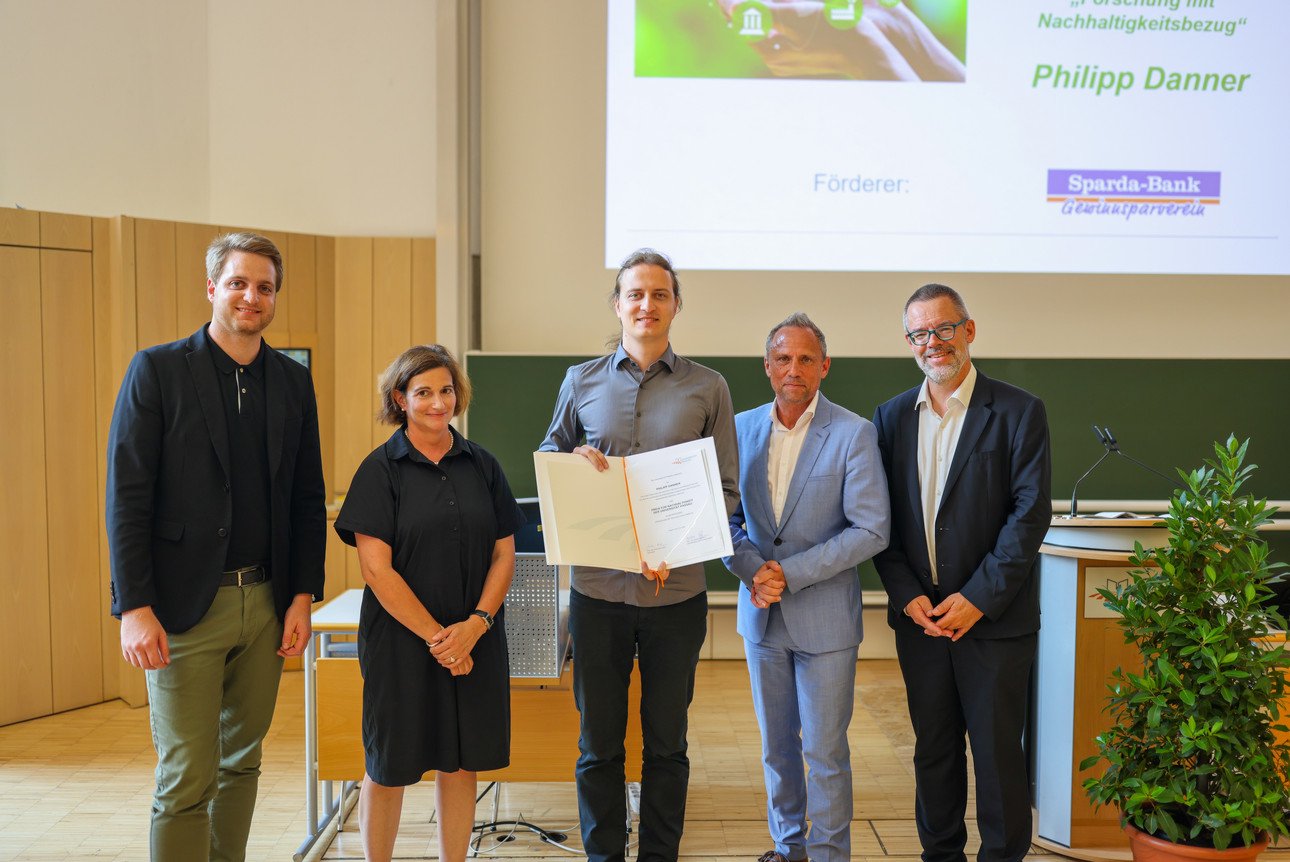
The University of Passau's 2025 Research Award for Sustainability was presented to Philipp Danner from the Chair of Computer Science with a focus on Computer Networks and Computer Communication (Prof. Hermann de Meer). Danner is being honoured for his many years of outstanding commitment to research and teaching in the fields of renewable energies, energy systems and sustainable energy supply.
Since 2017, Philipp Danner has been a research assistant at the Chair of de Meer and is involved in four research projects dealing with renewable energies, energy systems, energy communities and energy optimisation – key topics for the transformation of energy supply in Germany. These projects, some of which are carried out in cooperation with the Facility Management Department at the University of Passau, use the campus as a real-world laboratory to research the challenges of the energy transition, the integration of renewable energies and system stability from an IT perspective. These include, for example, the integration of electric vehicles into the power grid (ELECTRIFIC), the provision of system services for grid stabilisation (EASY-RES), the promotion of energy communities (LocalRES) and the EU project Meta-Build, in which an integrated energy management system for heating, cooling and electricity grids is being developed in cooperation with the University's Sustainability Hub. The sustainable transformation of energy supply in Germany increasingly requires such interdisciplinary approaches and innovative technologies in order to reconcile security of supply, environmental compatibility and resource efficiency.
His scientific achievements are reflected in several specialist publications and conference papers that explore the IT aspects of the energy transition in depth. In his laudatory speech, Prof. Dr. Werner Gamerith particularly highlighted Danner's coordinating role in an interdisciplinary proposal to the Werner von Siemens Foundation for the development of ‘Pervasive Virtual Synchronous Generators’. This proposal, which involved several faculties, illustrates Danner's ability to drive sustainable innovation across disciplinary boundaries. Even though the proposal fell just short of leading universities, it demonstrates the impact of his cross-professional networking.
Danner plays a central interface role in the EU Meta-Build project: he coordinates cooperation between international partners, the university's technical operations department and the sustainability hub with the aim of creating an energy management system that significantly improves energy efficiency and resource conservation on campus. Overall, his work is characterised by an impressive combination of theoretical depth, practical relevance and sustainable impact. This commitment is confirmed by positive reviews from Prof. Hermann de Meer and the Dean of the Faculty of Computer Science and Mathematics, Prof. Gordon Fraser, and contributes significantly to the sustainable profile building of the University of Passau.
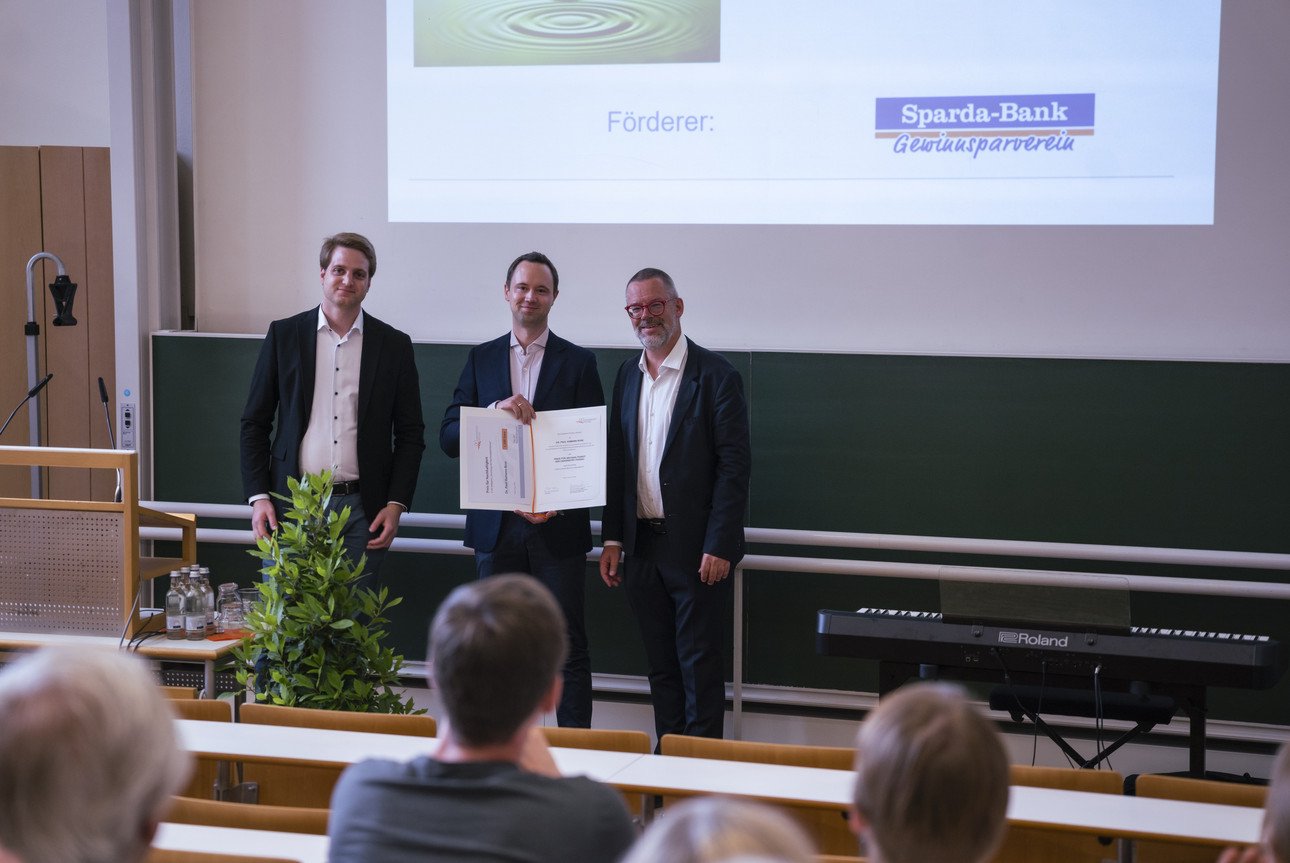
Dr. Paul Hamann-Rose from the Department of English Literature and Culture at the University of Passau was awarded this year's “Prize for Research with a Sustainability Focus”. In his research, he deals with literary and cultural discussions of ecology and human-environment relationships. Dr. Hamann-Rose has published a monograph on genetic concepts of ecology and conducts research on romantic concepts of ecology. He is active in various research networks and organizes international conferences on sustainability. He also integrates his research into teaching by offering seminars on topics such as “Energy Ecologies”. “Ideally, the awardee will demonstrate sustainable aspects in his or her entire academic life's work. If possible, all formats of academic research - publications, third-party funding, conferences - should touch on sustainability. If this research is then also passed on in teaching with a connection to sustainability, this would be an all-round worthy prizewinner. Our prizewinner does indeed meet all of these criteria. He is one of the most promising young academics in German English studies,” said Prof. Dr. Werner Gamerith in his laudatory speech, paying tribute to Dr. Paul Hamann-Rose.
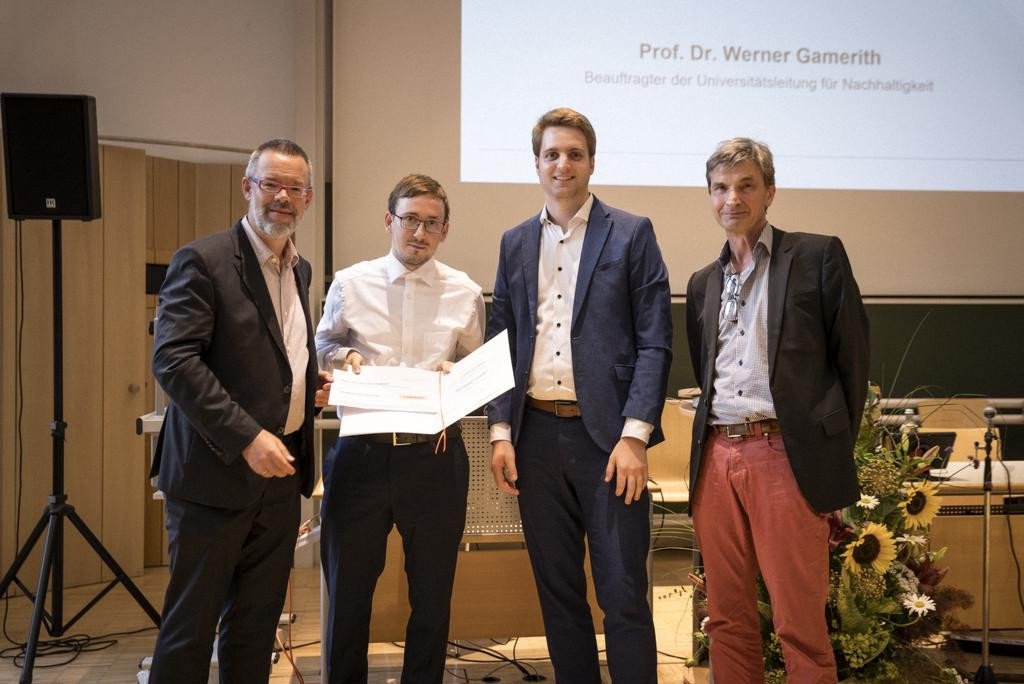
Excerpt from the laudatory speech by Prof. Dr. Werner Gamerith:
Completing a Master's degree with the top grade of 1.0 is not part of the standard academic record. The award for sustainability at the University of Passau in the category “Research with a focus on sustainability” goes to a young researcher who has already published his first research paper in an internationally renowned journal, the Journal of Behavioral Economics and Organization. He has also already gained merits in teaching and is involved in a variety of teaching projects such as DeepWrite.
So what is the merit of the young scientist in terms of sustainability? It is the written Master's thesis, which was also awarded the top grade of 1.0, which - and I quote from the statement of the thesis supervisor, Prof. Dr. Johann Graf Lambsdorff (Chair of Economics) - “[links] the problem of the overuse of natural resources with the risk of violent conflict. The connection between these two problem areas is not new. What is special, however, is the concrete experimental implementation. The interesting result is that scarce resources do not per se lead to more violence, as is sometimes assumed in the literature. The risk of increasing violence is only evident for endogenous scarcity as a result of human-induced overuse. This makes it clear that future problems of a lack of sustainability must also be understood in the context of their communication. The central question will be whether future generations will look for culprits for the increasing scarcity or whether they will interpret it as exogenous restrictions. This will provide insightful policy implications.”
The Master's thesis is being prepared for submission to a top-class journal, while the young researcher's dissertation project at the University of Passau has already been started. This single-mindedness is another quality that carries weight in the awarding of the Sustainability Prize.
The University of Passau 2023 Prize for Sustainability, endowed with 1,500 euros, in the category 'Research related to sustainability' goes to Mr. Stephan Geschwind.
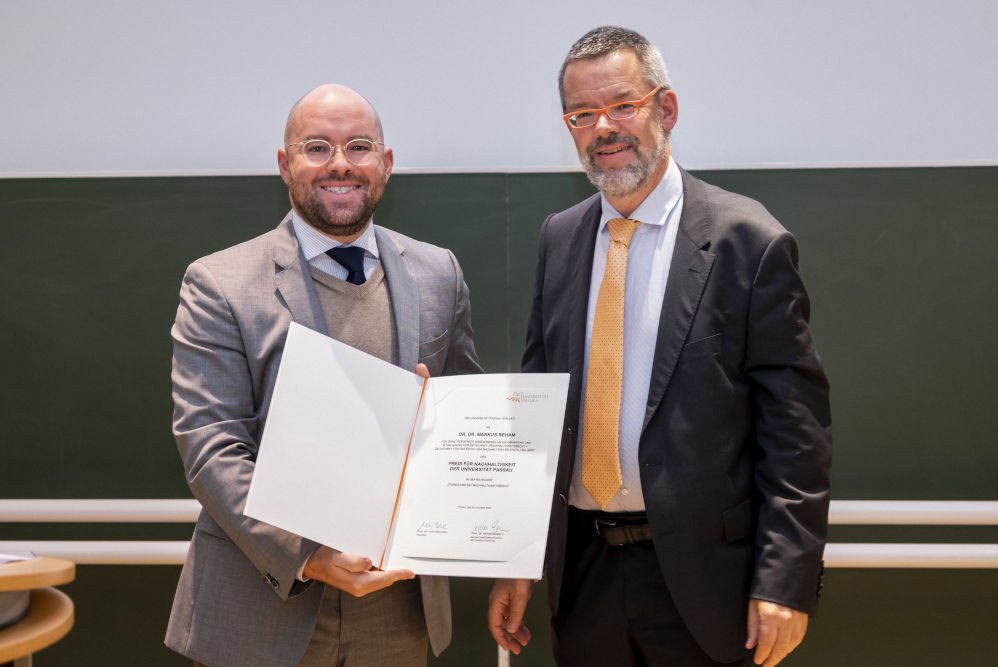
Excerpt from the laudatory speech by Prof. Dr. Werner Gamerith:
The Sustainability Award at the University of Passau in the category 'Research related to sustainability' goes to a young researcher who can already look back on an impressive academic CV in his still young career. When studying the curriculum vitae, it is hard to know which area to emphasize - all sections reflect excellence, internationality, numerous awards, diverse practical experience and, forming the basis of all this, an extremely remarkable student career with a double master's degree in history and law from the University of Vienna, an LLM degree from Columbia Law School in New York, a joint doctorate in public law from the Universities of Paris-Nanterre and Vienna and a Dr. phil. in history, also from the University of Vienna. phil. in history, also from the University of Vienna. I will pick out just a few of his international guest lectureships and research in the fields of international public international law and constitutional law, landing him in Cyprus, the Netherlands, France, Greece and Iceland, Russia and Malaysia, the UK and the USA. All of this took place in the first 33 years of his life.
But what is the merit for sustainability research? With the legal journal “Nachhaltigkeitsrecht - Zeitschrift für das Recht der Nachhaltigen Entwicklung”, co-founded by our award winner, he has, according to the reviewer and nominator Prof. Dr. Jörg Fedtke, “contributed significantly to the visibility of the University of Passau. It is the first legal journal to deal comprehensively with sustainable development across all legal disciplines”. With this journal, our prizewinner is pursuing the goal of a paradigm shift in jurisprudence - a paradigm shift that our keynote speaker also strongly advocated. I quote from the journal's mission statement: “Not only the law itself, but all associated processes will have to meet the requirements of sustainable action in the future. However, sustainability can only be realized as a guiding socio-political principle if it also succeeds in becoming a guiding legal principle.”
There is really nothing more that can be added to these words in terms of their program; they make a fundamental plea for a new constitution of our legal system based on the principles of sustainability.
The University of Passau 2022 Prize for Sustainability, endowed with 1,500 euros, in the category “Research related to sustainability” goes to Dr. Dr. Markus P. Beham.
The Award for Sustainability Activities and Teaching recognises members of the university community, whether as individuals or groups (e.g. student initiatives), who support the university’s efforts towards greater environmental, social or economic sustainability, as well as climate neutrality. This may take the form of activities on campus or outstanding commitment to sustainability education. These include, in particular, innovative teaching concepts, the integration of sustainability topics into teaching, and teaching and learning formats that promote skills for sustainable action.
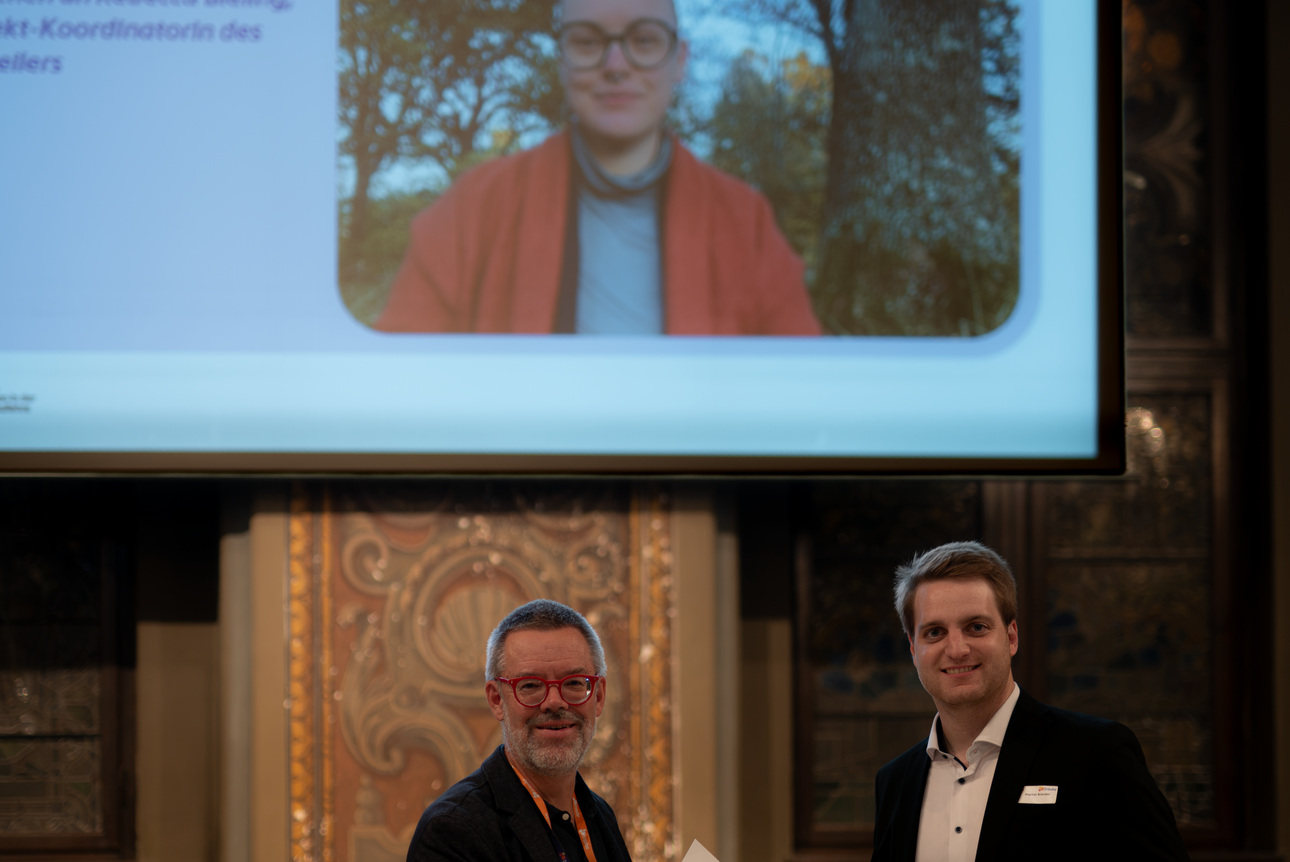
A project with real impact: Rebecca Bieling receives the award for sustainability initiatives on campus
In 2026, the University of Passau awarded the Sustainability Prize in the category ‘Sustainability Initiatives on Campus’ to Rebecca Bieling for her outstanding commitment to the ‘Fairteiler’. The award recognises a project that originated within the university community and has a far-reaching impact on the wider city community. At the heart of the project is a publicly accessible food-sharing shelf located in the foyer of the Dean’s Offices in the Nikolakloster. Here, students, staff and even people from outside the university can drop off and take away food that is still fit for consumption, free of charge.
More than just a shelf: environmental and social impact
The Fairteiler makes a tangible contribution to preventing food waste. By putting leftover food to good use, resources are conserved and the climate is protected, as both the production and transport of food release significant amounts of greenhouse gases. Through its partnership with Foodsharing, the Fairteiler is also part of a Passau-wide network of catering establishments and food businesses, meaning that even larger quantities of food can be saved from being thrown away. In this way, several tonnes of food are saved every year.
Furthermore, the project has an important social dimension: the free distribution of food also helps people on lower incomes, thereby promoting food equity. The Fairteiler is thus an example of sustainability in action, combining environmental, social and economic aspects.
Outstanding Commitment: The Role of Rebecca Bieling
Rebecca Bieling not only co-founded the food sharing scheme but also took the lead in managing and coordinating it in the years that followed. She ensured that the shelves were cleaned and maintained in accordance with hygiene standards, stocked the shelves, organised a team of volunteers, and liaised with the Foodsharing e.V. association and the relevant university departments. It is particularly worth noting that she reliably ensured compliance with the regulatory requirements set by the city and the university at all times – a responsible task which she undertook entirely on a voluntary basis. Furthermore, she arranged for her succession in a timely and competent manner, ensuring that the project can continue even after she has stepped down.
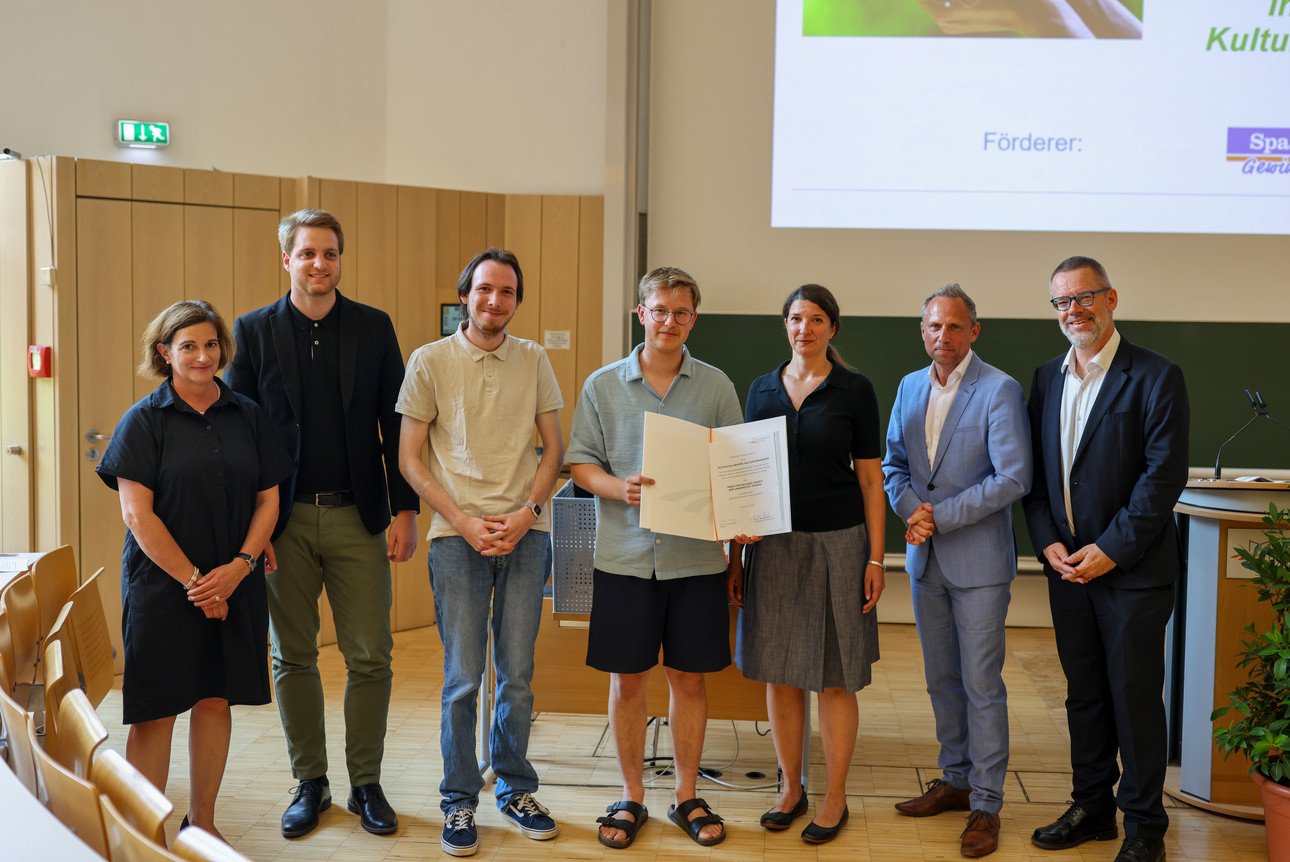
The 2025 award ceremony for sustainability initiatives on the University of Passau campus was entirely dedicated to the wide-ranging achievements of the KulturtranspOrt initiative. This initiative has established itself as a vibrant and creative hub for sustainable engagement on campus. The University is particularly proud of the greening project, featuring numerous raised beds, which actively contributes to promoting biodiversity, as well as its role in co-managing the Ackerdemie’s CampusAcker.
In addition to environmental projects, KulturtranspOrt also organises a wide range of social and cultural events that strengthen social cohesion and promote intercultural exchange. All activities are easily accessible and thus hold great social value for the university community. In his laudatory speech, Prof. Dr Werner Gamerith praised the initiative’s hugely important contribution to the university’s sustainable transformation.
During the event, attention was also drawn to the next major step: the initiative has now been formally established and is on the verge of being registered as a registered association. This will further strengthen its sustainability and organisational structures. Minister of State Thorsten Glauber, together with Mr Brandler from Sparda Bank, presented the award, which had already been given last year in recognition of outstanding commitment, but which this year went once again to KulturtranspOrt in recognition of its comprehensive and pioneering achievements.
Clemens Diener, student senator and active member, Jonathan Halbauer and Dr Stefanie Wehner, a representative of the association, accepted the award on behalf of the group. They demonstrate just how vibrant and forward-looking sustainability can be on campus – with plenty of creativity, a sense of community and a strong awareness of environmental and social responsibility.
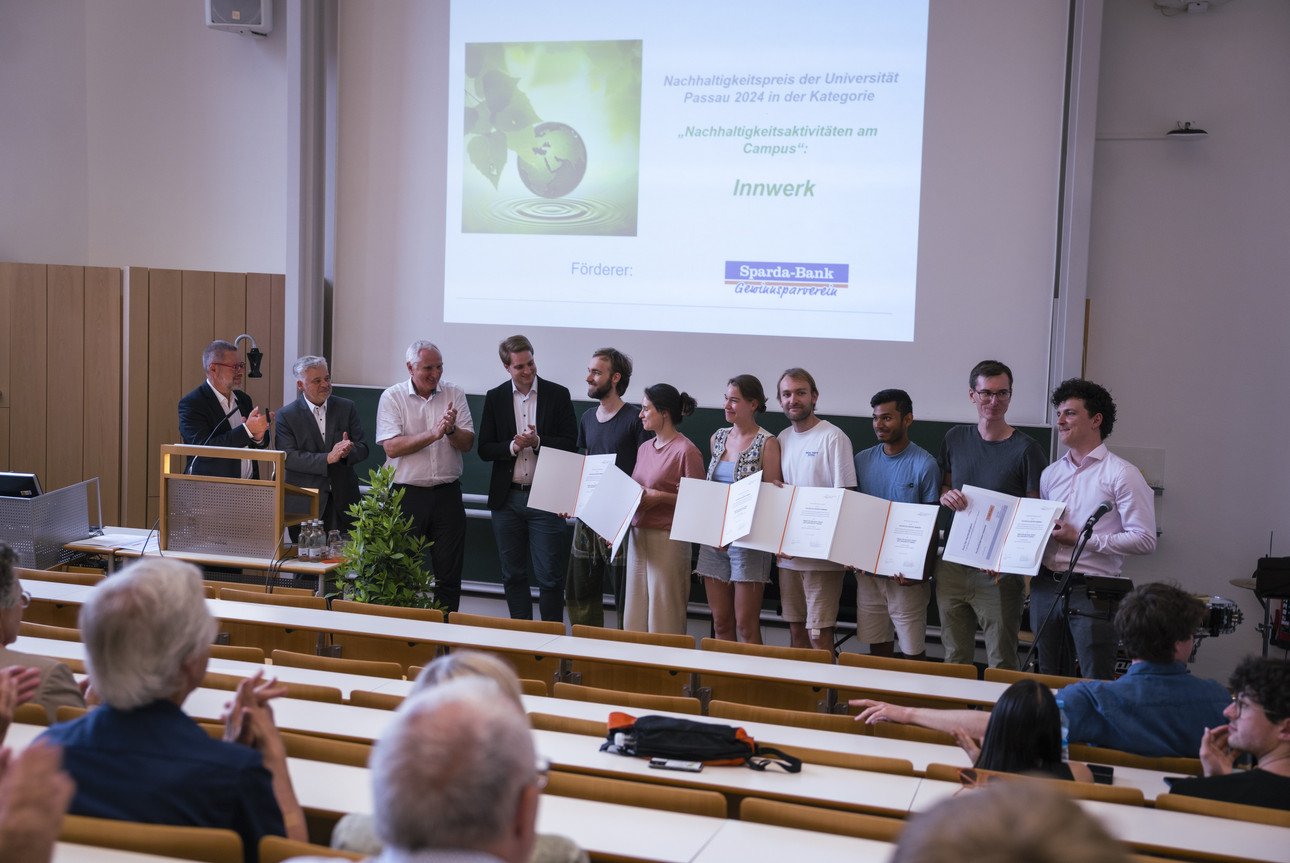
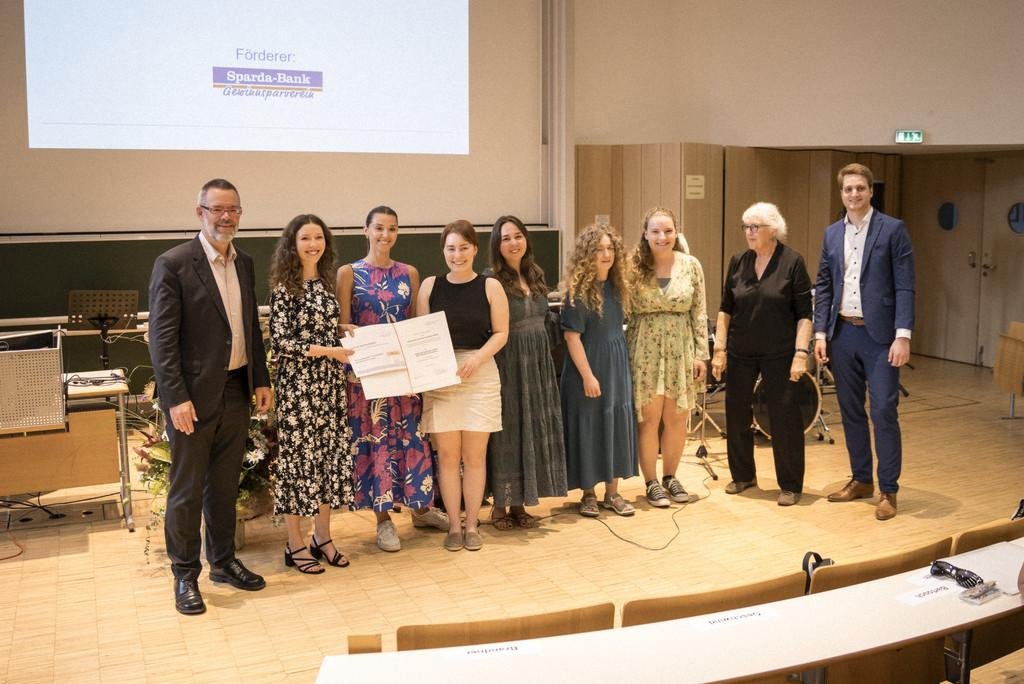
This year's “Prize for Sustainability Activities on Campus” was awarded to a group of students who founded the registered association “Innwerk”. The “Innwerk” is an open workshop that actively campaigns against the throwaway society by sharing tools and repairing them together. During the founding phase, the project was supported by the University of Passau and the European Solidarity Corps. The award-winning Innwerk students are Mathilda Dethleffsen, Julia Gasser, Hannes Hieronimi, Bastian Mogel, Georg Seibt and Pepe Voland. “The students are taking a conscious stand against the throwaway society and against unthinking consumption. The initiative started with five students and now more than ten volunteers in the Innstadt are working on repairing and restoring objects of all kinds. Not only is this sustainable per se, but also the idea that not everyone needs the same large toolbox, but that the equipment can be used more efficiently if it is used more often - i.e. together. This idea is therefore also linked to the idea of sharing - an essential approach in times of conscious use of resources,” said Prof. Dr. Werner Gamerith in his laudatory speech.
Excerpt from the laudatory speech by Prof. Dr. Werner Gamerith:
Today, we are not only celebrating Sustainability Day, but almost two whole weeks of sustainability - every day with a wide range of program content, from panel discussions to campus tours, from community activities around sustainable food to the presentation of a Passau unpackaged food store.
Behind this program are eight to ten students who have been filling sustainability with student life at the university for ten years now. In the years from 2018 to 2022 alone, the students were responsible for 75 events and workshops. In addition to the Sustainability Weeks in June, the team is also involved in the eleven other months of the year - including a sustainable city rally, a quiz with questions that build a bridge to the sustainable offering structure of the city of Passau, a (digital) Advent calendar with tips on gift-giving, more sustainable behavior and many other challenges in everyday student life. Joint initiatives with the canteen, such as the expansion of vegetarian or vegan dishes or the introduction of deposit cups, are also the responsibility of the students.
The result is an excellent balance of activities that make the campus more liveable and sustainable - and the duration of these activities, for ten years, is in itself a sign of sustainability.
The University of Passau 2023 Sustainability Award in the category “Sustainability activities on campus” goes to the University Sustainability Group.
Excerpt from the laudatory speech by Prof. Dr. Werner Gamerith:
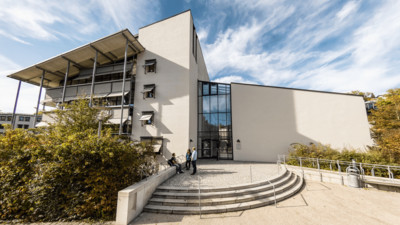
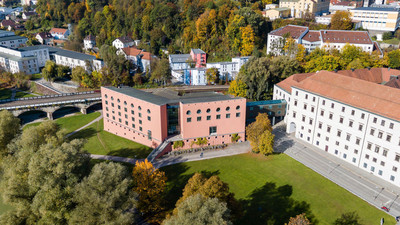
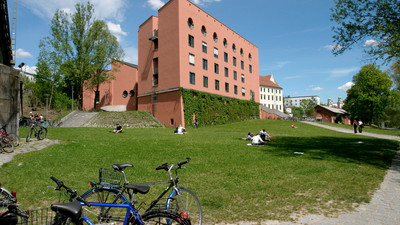
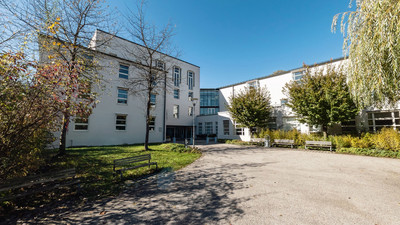
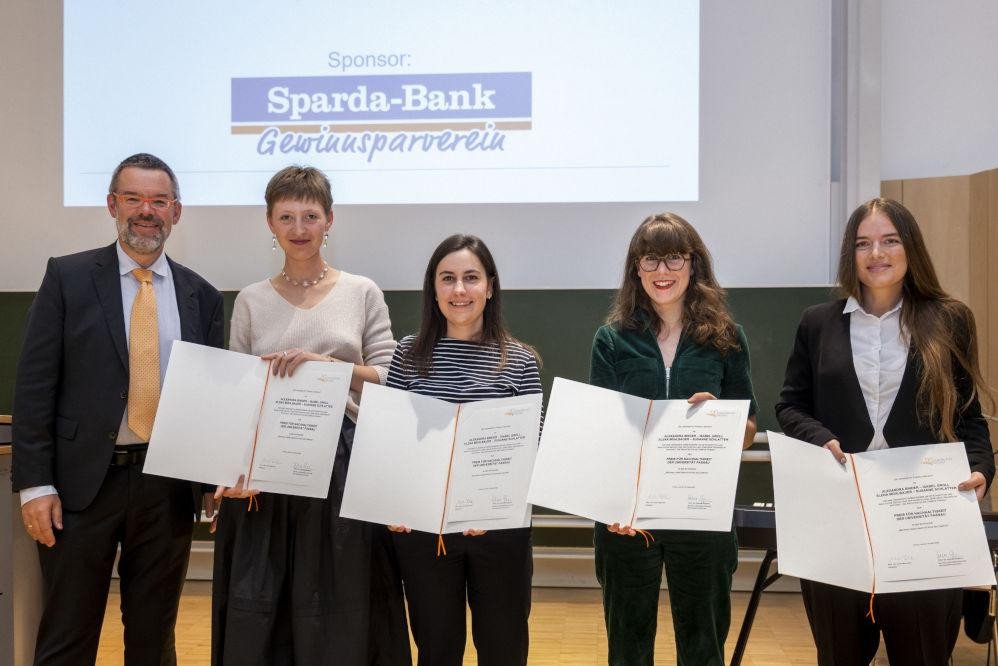
The prize for sustainability at the University of 2022 in the category “Sustainability activities on campus”, endowed with 1,500 euros, is awarded for the first time to four women, academics and Master's students who have been involved in the conception of the exhibition “A university is emerging. The architecture of the Passau campus'. A catalog was also produced as part of this exhibition. With this catalog, it has been possible to document for the first time the almost far-sighted building fabric of the young University of Passau, which could already be described as “sustainable” in the contemporary sense in the 1970s. It shows the special position of the University of Passau in sustainability and makes it known far beyond the narrower borders of the region. Two master's theses and parts of a cumulative dissertation formed the basis for the texts in the catalog. The reviewer, Prof. Dr. Jörg Trempler, Chair of Art History and Visual Studies, also points out in his explanatory statement that another aspect of the project is the media communication: a widely known video was created that documents the competence of the digital communication of scientific content. All in all, the exhibition and catalog have decisively anchored the reputation of the University of Passau as a sustainable urban development project in the public eye as early as the 1970s and brought the intentions of the architects and planners of the time back into the consciousness of today's university.
We are therefore convinced that this is an achievement worthy of an award.
The award for sustainability at the University 2022 in the category “Sustainability activities on campus” goes to
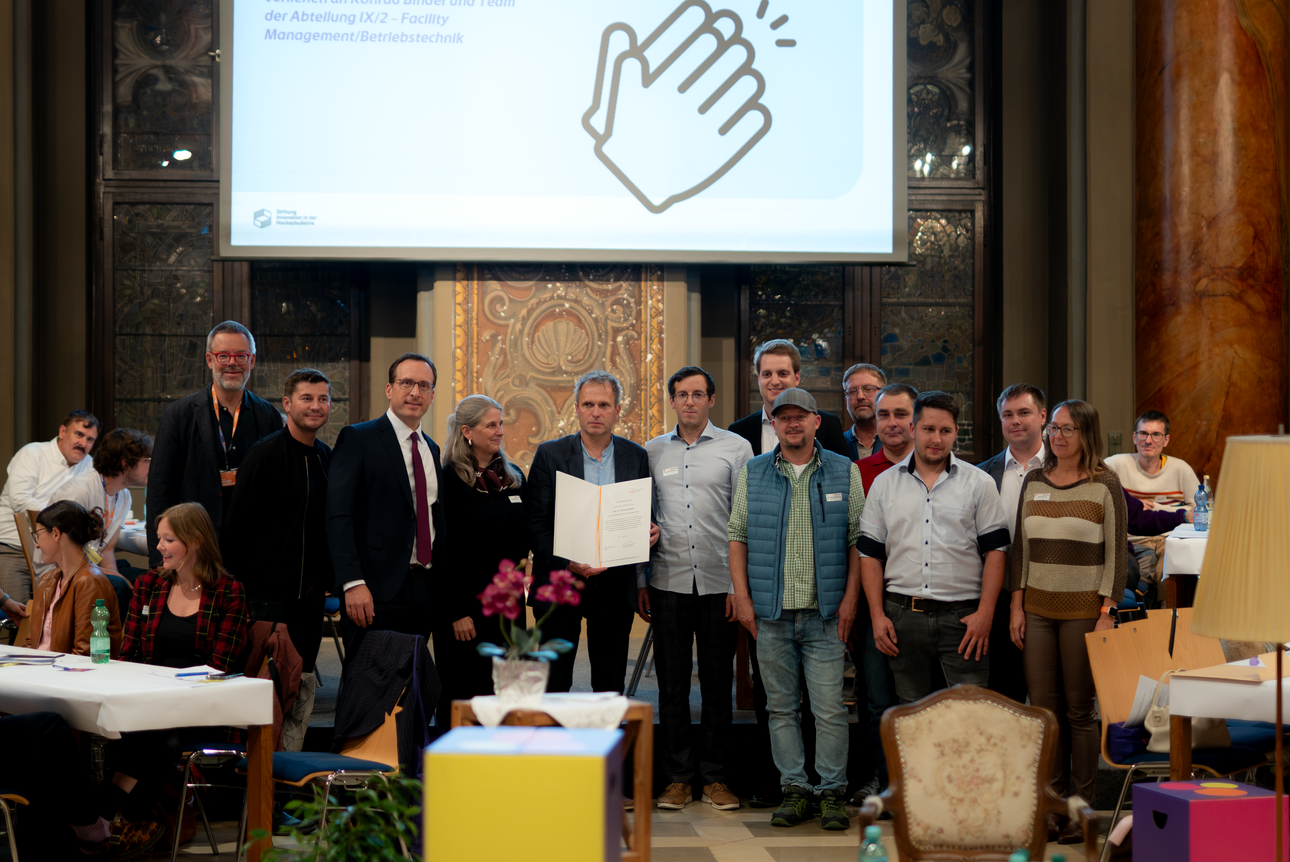
As part of the University of Passau’s Sustainability Awards, Dipl.-Ing. (FH) Konrad Binder and the team from Department IX/2 (Operations Engineering) were honoured for their outstanding contribution to sustainability. The award recognises their long-standing, outstanding commitment to the planning, coordination and implementation of the almost campus-wide photovoltaic system – one of the most significant infrastructure and sustainability projects in the university’s history.
Over a period of several years, Konrad Binder played a leading role in overseeing the project. This involved overcoming a wide range of technical, structural, organisational and financial challenges – a task that required a high degree of technical expertise, perseverance and coordination skills. The system, which has now been completed, has a total capacity of around 2,600 kWp and spans numerous buildings across the campus. It makes a significant contribution to strengthening the university’s self-sufficiency in renewable energy, reducing CO₂ emissions and making the university less reliant on external electricity supplies in the long term.
A key component for the efficiency and sustainability of the system is the integrated electricity storage unit with a capacity of over 700 kWh. This enables the solar power generated to be stored selectively and retrieved as and when required. As a result, the university’s self-consumption is significantly increased and its reliance on external electricity supplies is largely reduced. The integration of this modern storage technology, together with extensive technical and safety-related measures, has created a sustainable and resilient energy infrastructure.
The decisive impetus for the independent implementation of the project came from a generous funding commitment from the Free State of Bavaria. Between this funding commitment and the project’s completion lay a long process fraught with numerous technical, structural and economic hurdles.
It is particularly worth noting that the project was carried out whilst the university remained in full operation. Thanks to forward-thinking planning and the extraordinary commitment of Mr Binder and his team, disruption to research, teaching and administration was largely avoided. The photovoltaic system is therefore not only a major technical project, but also an example of how sustainable infrastructure measures can be reconciled with the day-to-day running of a university.
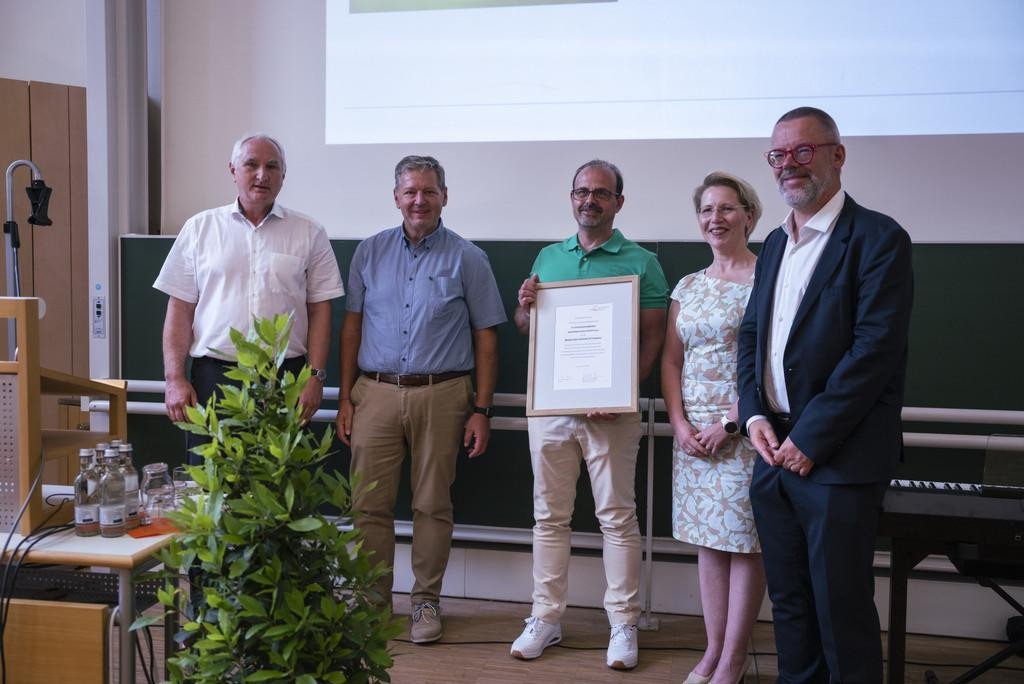
The Studierendenwerk Niederbayern/Oberpfalz (STWNO) received the “Honorary Award for Sustainability Activities on Campus”. The Studierendenwerk's activities in the field of sustainability cover various areas and demonstrate a strong commitment to environmental protection, social responsibility and ethical behavior. For example, the STWNO only offers fair trade coffee, tea and cocoa in the cafeterias. The selection of chocolate products with the Trans Fair seal also ensures that the producers are fairly remunerated. Another outstanding feature is the STWNO's sustainable commitment to workwear. The decision to give preference to labels such as the Green Button and fair trade cotton, as well as to use certified materials that have been tested for harmful substances, underlines the STWNO's efforts to meet the highest sustainability standards in the procurement of textiles. The STWNO is also actively committed to sustainability and better animal welfare, as demonstrated by its accession to the European Broiler Chicken Initiative at the end of 2020. The STWNO is also making an important contribution to reducing single-use packaging by introducing its own reusable deposit cups and a reusable to-go system for food.
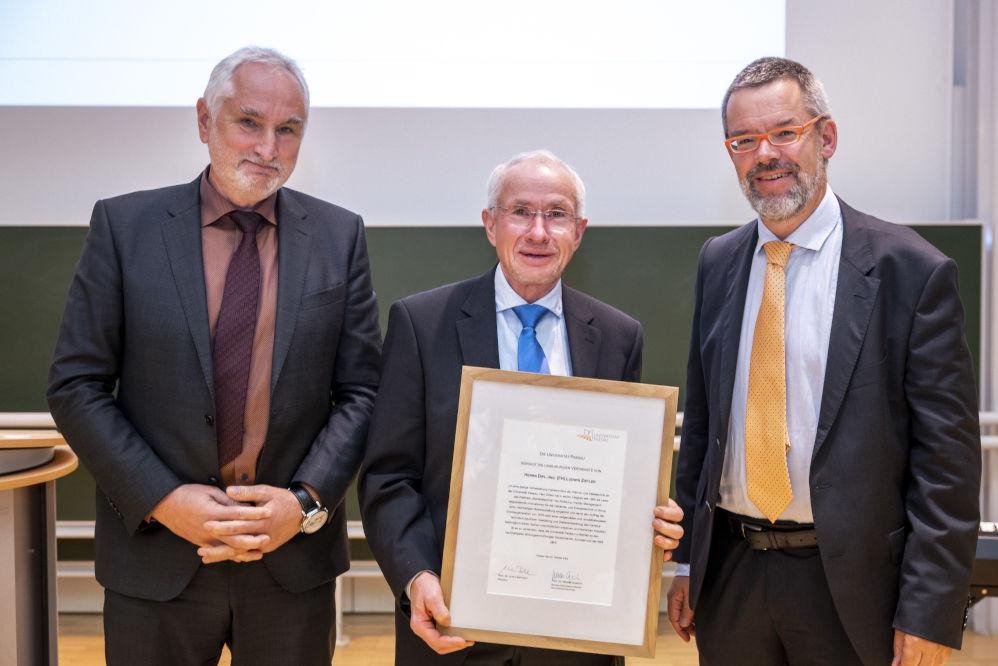
Ludwig Zistler, the long-serving and deserving Head of the Department of Operating Technology, was honored for his life's work and his outstanding efforts to achieve climate-neutral energy technology at the University of Passau.
In his laudatory speech, President Bartosch traced the stages of Ludwig Zistler's work since 1985 and concluded with the words: “His achievements and his profound and unique knowledge are not only a model for future technical innovations and further developments, but also a vivid example of what can be achieved regionally and implemented in terms of sustainability and independence.”
The prizewinner is selected by the university executive. Nominations are authorised:
Self-application is not possible.
Nominations may be submitted in digital form, together with the following documents, via Ms Falkner to the Vice President for Academic Infrastructure/IT and Sustainability or the University Management’s Sustainability Officer: