| Degree awarded | Master of Arts (M.A.) |
|---|---|
| Duration and credits | 4 semesters; 120 ECTS credits |
| Starts in | October (winter semester) |
| Language of instruction | German |
The M.A. Geographies of Sustainability degree programme combines geographical thinking with the pressing questions of our time: How can socially just, ecologically viable and economically stable transformations be achieved? And how can these processes be understood spatially and actively shaped? With a focus on topics such as sustainable tourism, regional development or climate adaptation, you will learn how to develop solutions for complex human-environment challenges. Hands-on fieldwork experience and interdisciplinary collaboration are key characteristics of the programme.
This degree is ideal for those who think in terms of complex systems, aspire to reshape spaces and are eager not only to study sustainability but to actively contribute to it.
For details, please consult the Academic Advice Service's infosheet [German content].
Whether in research, consultancy, urban planning, NGO management or sustainable tourism – this Master's degree prepares you to drive meaningful change towards a resilient, future-proof society. Typical career paths include:
The degree programme consists of three module areas and the Master's thesis in geography. In total you will acquire 120 ECTS credits.
You will enhance your knowledge of human and physical geography, applying it to current sustainability and transformation issues. You will also critically examine human-environment relationships as well as economic and tourism trends and regional transformation processes – using theory, empirical research and practical application. The goal is to assess complex spatial relationships and develop scientifically sound solutions.
In this module area, you will gain advanced competences in qualitative and quantitative methods of social and environmental research and in the use of geographical information systems. You will learn how to select suitable methods, to analyse spatial and ecological data and to scientifically interpret findings. Optional interdisciplinary methods training is available.
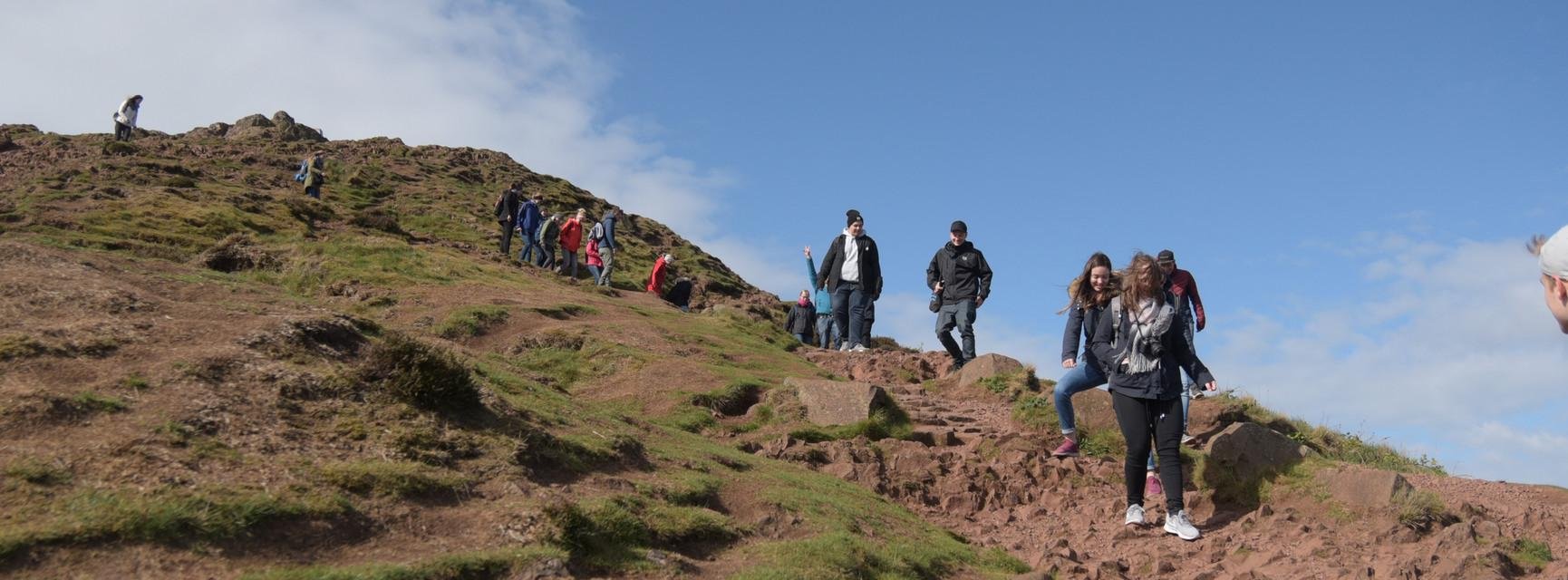
You will plan and conduct your own fieldwork projects – from formulating research questions to data collection, analysis and knowledge transfer. In doing so, you will be tackling real-world social challenges and apply the scientific methods you have learnt. Finally, the compulsory internship will give you the opportunity to connect your academic learning with real-world professional experience.
If you are interested in M.A. Geography, these degree programmes might also be worth checking out:
The Academic Advice Service is the first port of call for all enquiries related to studying at the University!
Drop us a line: advice@uni-passau.de