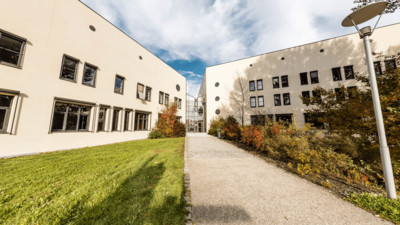

Workshop of the IRTF Research Group “Sustainability and the Internet”
Title:
The Internet meets the Electricity Grid: Technical Standards and Societal Challenges
Date:
July 16–17, 2026
Location:
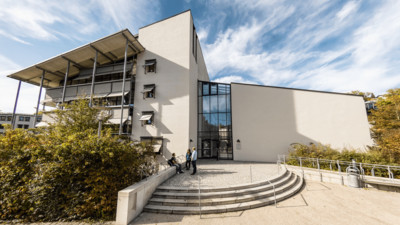
Seminar Room (SR) 001
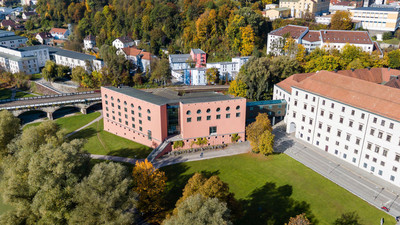
IT Centre (ITZ), University of Passau
Innstrasse 43
94032 Passau, Germany
Programme:
Friederich Kupzog (AIT Austrian Institute of Technology, Austria)
Communication and energy supply systems: interlinking worlds caught in complexity
The talk will outline emerging requirements for communication in future energy systems. The electric power system must be understood as a distributed system whose efficiency depends on advanced digitalization, automation, and coordination mechanisms. Early work has already highlighted the importance of self‑organization, flexibility management, and the tight coupling between computational capabilities and communication network performance. The role of digital tools in strategic planning and implementation processes has gained importance since then. With a revolutionary increase of the abilities on the digital side, future energy systems will benefit from completely re-thinking planning, management and coordination architectures. This would boost robustness, resilience, cybersecurity, and seamless integration between energy and ICT domains.
What makes sense and what doesn’t, how far could/should we take this?
Moderator: Hermann de Meer (University of Passau)
Panel Speakers: Antonello Monti/Klaus Wehrle (joint talk, both RWTH Aachen, Germany), Christoph Hildenbrand (KIT - Karlsruhe Institute of Technology, Germany), David Oran (Network Systems Research & Design), Yihong Zhou (University of Oxford, UK)
Cedric Westphal (University of California, Santa Cruz (UCSC), USA)
Challenges in Management for Green Networking
The energy consumption of the Internet (defined to include the data centeres that process AI) has become a prominent point of debate over the last few years. Climate change has made the carbon emissions of any activity, including that of the Internet, subject to scrutiny. Yet, while there have been many studies to document the impact of the networks on emissions, the protocol themselves have been mostly oblivious to the need to first assess and monitor energy use and carbon emissions; and secondly, to manage and optimize these quantities. I will discuss some of the steps taken so far to bring awareness of these issues into the protocol design, in particular through the lens of RFC9845, Challenges and Opportunities in Management for Green Networking, which we drafted to highlight the issue within the IETF community.
How has the Internet been impacted by renewables, energy storage, carbon awareness & accountability, microgrid build-out, grid balance through elastic “computing” loads, capacity planning, AI / Data Centers?
Moderator: Eve Schooler (University of Oxford, UK)
Speakers: Chris Adams (Green SW Foundation / Green Web Foundation), David Oran (Network Systems Research & Design), Luis Contreras Murillo (Telefónica Innovación Digital, Spain), Sawsan El Zahr (University of Oxford, UK)
Klara Nahrstedt (University of Illinois Urbana-Champaign, USA)
Need for Innovative Energy, Water and Thermal Solutions to run Next Generation Data Centers (virtual talk)
On December 8-9, 2025, experts across academia, industry and government met at the NSF-sponsored Workshop to discuss growing compute-energy nexus challenges, especially challenges facing data centers, running AI and supercomputing. In this presentation, I will give a brief overview of main points that were discussed in keynotes, panels and among diverse stakeholders including power grid utilities, universities and industries during the workshop.
It was very clear from the presentations and discussions that power grid and data centers will need to change to support AI infrastructures sustainably, efficiently and effectively. The new AI loads with flexible demands, and the outdated grid processes do not match well. Several speakers provided innovative solutions to enable grid-data center integration. Algorithmic foundations, and benchmarking approaches for water and carbon footprint were outlined when running LLM inference engines. In addition to energy, thermal and water management was on the agenda and again challenges as well as potential directions were presented.
Great care was given to revisit how data centers for AI loads are being built and how one should reconsider serving intelligence in sustainable and energy-efficient manner in terms of chips and system software co-design. The same care was stressed at the power distribution and management level. For example, the power grid has challenges to provide gigawatts at the speed of AI and potentially different power-grid-data-centers designs might be considered.
Finally, critical short-term and long-term actions have been discussed to achieve sustainable ultra-scale systems. It was very clear that next steps must include power-grid and high-tech companies working closely together with policy makers and academic researchers. It was emphasized that the upcoming solutions need to align with the country’s AI infrastructure strategy as well as they must address societal concerns so that at the end these solutions benefit the whole society.
Laura Watts (University of Copenhagen, Denmark)
Serious Solarpunk: A sociotechnical method for sustainable energy-internet infrastructure
A flexible energy system integrated across local heat, power and transport networks, governed by a local organisation, across a federated smart grid. An underwater data center, powered by marine energy managed by a local non-profit company, whose power use generates revenue for a local community. These two infrastructures are not utopian futures, but existing projects. They were both on-grid demonstrations of sustainable energy and internet systems on the islands of Orkney, Scotland.
This keynote will draw on these demonstrations to propose a sociotechnical method for developing sustainable energy-internet infrastructure, in collaboration with the places they are inseparable from; how they can be up-and-running fast; how they can become resilient. In short, a serious method for developing serious solarpunk systems–which are not utopian but practical and possible.
Is a future where electricity and Internet infrastructures are merged even possible? If so, how should the path to this future look?
Moderator: Ali Rezaki (Nokia)
Speakers: Daniel Schien (University of Bristol, UK), Veit Hagenmeyer (KIT - Karlsruhe Institute of Technology, Germany), Jukka Manner (Aalto University, Finland)
What measurement data needs cross-pollination? Is it granular, frequent, and accessible enough to be considered trustworthy (e.g., carbon intensity)?
Moderator: Henning Schulzrinne (Columbia Univeristy, USA, previously FCC (Federal Communications Commission))
Speakers: Farzaneh Pourahmadi (Technical University of Denmark, Denmark), Marisol Palmero (Greening of Streaming/IEEE SA), Steffen Vogel (OPAL-RT Germany GmbH, Germany)
Next steps: in the IETF, IEC and elsewhere
Moderator: Michael Welzl (University of Oslo)
Standard reps: Dirk Kutscher (Hong Kong University of Science & Technology, China), Friederich Kupzog (AIT, Austria), Veit Hagenmeyer (KIT - Karlsruhe Institute of Technology, Germany), Chris Adams (Green SW Foundation / Green Web Foundation)