Logo of the University of Passau
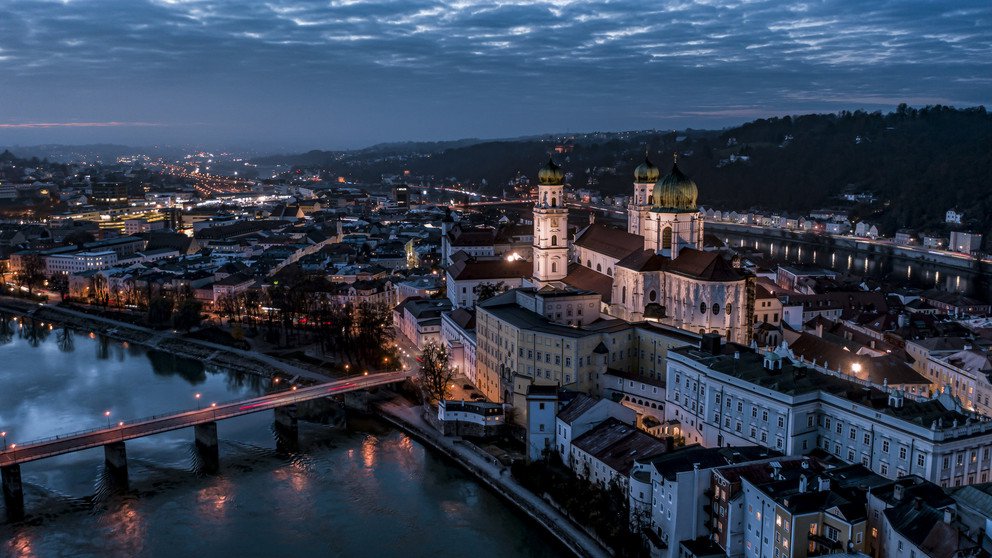
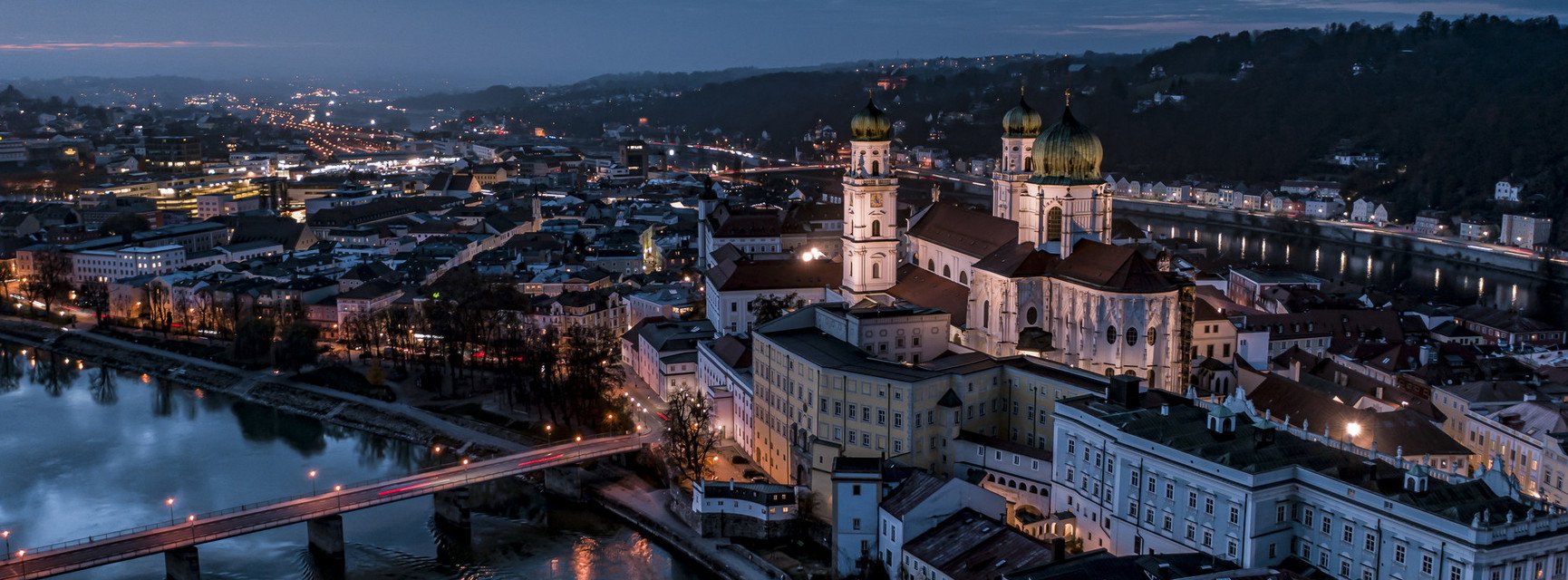
Luftbild der Altstadt von Passau bei Nacht vom Inn aus mit Blick auf den Dom Luftbild der Altstadt von Passau bei Nacht vom Inn aus mit Blick auf den Dom

Speakers

Speakers

Grid Keynote: Communication and energy supply systems: interlinking worlds caught in complexity

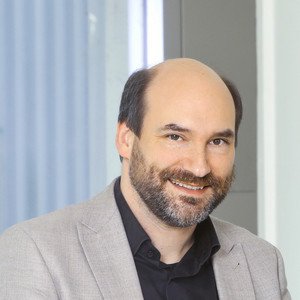
Dr. Friederich Kupzog

Speaker: Dr. techn. Friederich Kupzog

AIT Austrian Institute of Technology, Austria

Friederich Kupzog is the Head of the Center for Energy at AIT Austrian Institute of Technology, overseeing around 300 staff and driving strategic development in energy research.

He studied Electrical Engineering and Information Technology at RWTH Aachen University and earned his doctorate (Dr. techn.) at TU Wien, focusing on Smart Grids.

Kupzog joined AIT in 2012 as Senior Scientist and Thematic Coordinator in the Center for Energy. He led the Competence Unit Electric Energy Systems and Power and Renewable Gas Systems. Prior roles include heading the “Energy & IT” research group at TU Wien's Institute for Computer Technology and work at Siemens Corporate Research on intelligent low-voltage networks.

Kupzog is a pioneer in Smart Grids, specializing in digitalization of energy systems, verification methods for networked Smart Grid technologies, and integration of renewables, EVs, and heat pumps into grid management. His work advances power system ICT, software-defined networking, edge computing, and blockchain for resilient, efficient grids amid rising demand and aging infrastructure. He contributes to national/international networks, lectures at TU Wien, and supports sector coupling, energy supply systems, and AI-driven energy transformation.
Internet Keynote: Challenges in Management for Green Networking

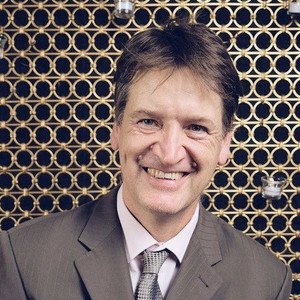
Prof. Cederic Westphal

Speaker: Prof. Cedric Westphal, PhD

University of California, Santa Cruz (UCSC), USA

Cedric Westphal is an associate adjunct professor in Computer Science and Engineering since September 2024 at University of California, Santa Cruz (UCSC). Prior to this, he was a Principal Research Architect with Futurewei working on future network architectures, both for wired and wireless networks from 2011 until 2024. His current focus is on next generation Internet, green networking, and networking for High Performance Computing.

He was an adjunct assistant, then associate professor in Computer
Engineering in his first term with the University of California, Santa
Cruz from 2009 to 2019. He has worked at DOCOMO Innovations from 2007
to 2011 in the Networking Architecture Group focusing on next
generation network architectures. He was at Nokia Research Center (now
Nokia Bell Labs) from 2000 to 2006. He has received a MSEE in 1995
from Ecole Centrale Paris, and a MS (1995) and PhD (2000) in EE from
the University of California, Los Angeles. From 1997 to 2000, he was a
visiting researcher at Stanford University.

Cedric Westphal has authored and coauthored over a hundred journal and
conference papers, including several best paper awards at conferences
such as IEEE ICC’11, IEEE ICNC’18, IEEE MuSIC’16 and others. He has
been awarded over thirty patents. He has received the IEEE
Communication Society IINTC 2018 Technical Achievement Award to
“recognize a lifelong set of outstanding technical contributions in
the area of information infrastructure and networking.” He also has
received the 2023 "Best Conference Paper Award" from the IEEE MMTC,
for the best paper published within the three prior years in a
conference on the topic of multi-media.

He was an area editor for the ACM/IEEE Transactions on Networking, an
assistant editor for (Elsevier) Computer Networks journal, and a guest
editor for Ad Hoc Networks journal and ACM/IEEE JSAC. He is an
assistant editor for IEEE Transactions on Multi-Media. He has served
as a reviewer for the NSF, GENI, the EU FP7, INRIA, and other funding
agencies; he has chaired the technical program committee of several
conferences, including IEEE ICC (NGN symposium), IEEE NFV-SDN or IEEE
IPCCC, and he was the general chair for IEEE INFOCOM 2016.

NSF Briefing: Briefing on NSF Compute-Energy Nexus workshop

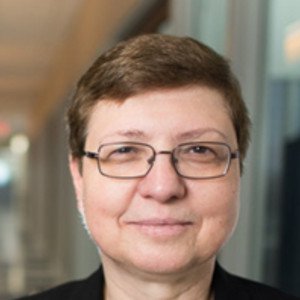
Klara Nahrstedt

Speaker: Prof. Klara Nahrstedt, PhD

University of Illinois Urbana-Champaign, USA

Klara Nahrstedt is the Swanlund Endowed Chair and Professor in the Siebel School of Computing and Data Science, and the Director of Coordinated Science Laboratory in the Grainger College of Engineering at the University of Illinois at Urbana-Champaign. Her research interests are directed toward compute-energy nexus, tele-immersive and 360 video systems, end-to-end Quality of Service (QoS), resource management in large-scale distributed systems and networks, machine learning for systems, and cyber-physical systems. She is the co-author of multimedia books “Multimedia: Computing, Communications and Applications”, published by Prentice Hall, and “Multimedia Systems”, published by Springer Verlag. She is the recipient of the IEEE Communication Society Leonard Abraham Award for Research Achievements, Humboldt Research Award, IEEE Computer Society Technical Achievement Award, ACM SIGMM Technical Achievement Award, and others. She was the elected chair of the ACM Special Interest Group in Multimedia (SIGMM) from 2007-2013.

Klara Nahrstedt received her Diploma in Mathematics from Humboldt University, Berlin, Germany in 1985. In 1995, she received her PhD from the University of Pennsylvania in the Department of Computer and Information Science. She is the ACM, IEEE, and AAAS Fellow, Member of the German National Academy of Sciences (Leopoldina Society), and Member of the US National Academy of Engineering.

Socio-technical Keynote: Serious Solarpunk: A sociotechnical method for sustainable energy-internet infrastructure

Laura Watts

Speaker: Prof. Dr. Laura Watts

University of Copenhagen, Dänemark

Laura Watts is an award-winning Author and Professor in Social Studies of Science & Technology (STS). She is a professor at Center for Applied Ecological Thinking, University of Copenhagen, as well as professor at Department for Interdisciplinary Studies of Culture, Norwegian University of Science & Technology (NTNU).

Her research and writing explores how the energy and tech future gets made in places ‘at the edge’–places where sustainable energy and data networks meet–and how it can be made otherwise through speculative methods. Her last book, Energy at the End of the World: An Orkney Islands Saga (MIT Press) won the 4S Rachel Carson Prize for its social and political relevance, and was shortlisted for the Saltire Research Book of the Year. This was based on her 20 year research collaboration with renewable energy organisations in Orkney, Scotland.

She has consulted and collaborated on energy and tech futures with organisations from Intel to Mozilla, from UNESCO to Vattenfall, often drawing on her prior experience working in wireless networks (Nortel). As part of the Reconstrained Design Group she won the International Cultural Innovation Prize from Centre de Cultura Contemporània de Barcelona for ‘The Newton Machine’ a community-built energy storage device designed from spare parts. Most recently she created ‘Northdark’ a narrative role-playing game set in a Nordic data center that explores balancing power across processing and place. She is currently working on Data Quality for Responsible AI in Energy Systems and Imagining Positive Energy Futures for rural and Arctic Norway–as well as writing empirical solarpunk futures.

I agree that a connection to the Vimeo server will be established when the video is played and that personal data (e.g. your IP address) will be transmitted.
I agree that a connection to the YouTube server will be established when the video is played and that personal data (e.g. your IP address) will be transmitted.
Show video